Followers

Total Pageviews

Showing posts with label racism. Show all posts

Sunday, March 15, 2026

Wonderland Burlesque's Down The Rabbit Hole: Bosko - Part 8 of 8

Wonderland Burlesque's
Down The Rabbit Hole:
Bosko
Part 8 of 8

Down The Rabbit Hole merely places a spotlight on something slightly unusual that's caught my interest. With the help of Wikipedia, YouTube, and other sites, I gather information and learn something new.

Today, we take a final look at Harman and Ising's classic cartoon character, Bosko!

--- ---
From Wikipedia:

Bosko is an animated cartoon character created by animators Hugh Harman and Rudolf Ising. Bosko was the first recurring character in Leon Schlesinger's cartoon series and was the star of thirty-nine Looney Tunes shorts released by Warner Bros. He was voiced by Carman Maxwell, Bernard B. Brown, Johnny Murray, and Philip Hurlic during the 1920s and 1930s and once by Don Messick during the 1990s.

In 1927, Harman and Ising worked for the Walt Disney Studios on a series of live-action/animated short subjects known as the Alice Comedies. The two animators created Bosko in 1928 to capitalize on the recent success of talkies in the motion picture industry - in particular, The Jazz Singer (1927). They began thinking about making a sound cartoon with Bosko in 1928 even prior to their departure from Walt Disney. The character was registered as a 'Negro boy' under the name of Bosko.

After Disney, they worked for a year at Universal on the second season of their Oswald The Rabbit series, and then, in 1929, released their first independent short, Bosko, The Talk-Ink Kid. The purpose of the first short was to demonstrate the teams' ability to coordinate sound with animation. This was a landmark in animation history for being the first cartoon to predominantly feature synchronized speech, setting them "apart from early Disney sound cartoons because it emphasized not music but dialogue". Marketed to various possible outlets, Leon Schlesinger eventually offered them a contract to produce a series of cartoons for Warner Bros. The original short was not seen by the general public until 70 years later - thanks to Cartoon Network.

In his book, Of Mice and Magic, Leonard Maltin states that this early version of Bosko... "was in fact a cartoon-ized version of a young black boy... he spoke in a Southern Negro dialect... in subsequent films this characterization was eschewed, or perhaps forgotten. This could be called sloppiness on the part of Harman and Ising, but it also indicates the uncertain nature of the character itself."

Bosko became the star vehicle for Warner Bros. new Looney Tunes cartoon series. In the early cartoons, he wore long pants and a derby hat, and was frequently in the company of a girlfriend named Honey, a dog named Bruno, Honey's humanized cat named Wilbur and an antagonistic goat. Whether admiring a dress worn by Honey or eating a sandwich (with exaggerated chewing) Bosko had a stock exclamatory reaction indicating his pleasure "Mmmm! Dat sho' is fine!" which became something of a catch phrase.

For the most part, Harman and Ising never called attention to Bosko's racial status, and stayed clear of negative stereotypes involving dice and watermelon - concentrating instead on positive portrayals with Bosko as a spunky and resourceful boy. Bosko's adventures and behavior were heavily influenced by vaudeville, the most popular entertainment of the time. While today some of Bosko's antics may be considered offensive, such portrayals were commonplace at the time of the cartoon's original release. In the later Looney Tunes shorts in which Bosko appeared, his 'accent' disappeared altogether - consequently, his race became more ambiguous.

Bosko would go on to star in thirty-nine musical films (one of which was not released). These were the early days of sound cartoons, and audiences were enthralled simply to see characters talking and moving in step with the music. The shorts are similar to those Disney was producing at the time. The main difference? Budget - Harman and Ising had a budget of $6K, while Disney typically spent $10K per short. This caused Harman and Ising to reuse footage much more frequently than Disney. However, Warner Bros. provided access to a large musical library with all the popular tunes of the day, lavish orchestras and sound recording equipment and staff free of charge.

In 1933, Harman and Ising broke with Warner Bros. over budget disputes. The pair had been careful to secure all rights to the Bosko character and took him with them at the time of their departure. They landed at MGM, however, Bosko, as the public knew him, only lasted for two cartoons. Reintroduced as a more humanized boy with a wild imagination, this new character was Bosko in name only. The new Bosko was poorly-received and lasted seven cartoons before being permanently retired. MGM then fired Harman and Ising due to cost overruns on the films they produced.

When Warner Bros. began marketing Looney Toons to television, Bosko was part of that package. Bosko cartoons were also shown on Nickelodeon from 1988-1992. The character appeared in a 1990 episode of the television series Tiny Toon Adventures titled Fields of Honey, a portrait in the 1996 film Space Jam, this time in his original form, and, in his original form, in the Animaniacs cartoon The Girl with the Googily Goop, in which he is seen parking his car. Another modern appearance was a Futurama opening in Sinkin' in the Bathtub, where he runs off a cliff from the car with Honey in it.

Warner Bros. held the rights to all Bosko cartoons, including those at MGM. However, subsequently, a number of them are now in the public domain. 

Bit of a problem going forward... starting with the 1933 Bosko cartoons, the remaining cartoons aren't in public domain yet, so... we end up with shortened versions or versions with reviewers. Well, at least you get a taste of them.

Here are the last six cartoons! 

--- ---

The Old House
(1936)

Circus Daze
(1937)

Bosko's Easter Eggs
(1937)

Little Ol' Bosko and the Pirates
(1937)

Little Ol' Bosko and the Cannibals
(1937)
 
Little Ol' Bosko in Bagdad
1938
 The last Bosko film.

--- ---


--- ---

Sunday, March 08, 2026

Wonderland Burlesque's Down The Rabbit Hole: Bosko - Part 7 of 8

Wonderland Burlesque's
Down The Rabbit Hole:
Bosko
Part 7 of 8

Down The Rabbit Hole merely places a spotlight on something slightly unusual that's caught my interest. With the help of Wikipedia, YouTube, and other sites, I gather information and learn something new.

Today, we learn all about animators Harman and Ising's classic cartoon character, Bosko!

--- ---
From Wikipedia:

Bosko is an animated cartoon character created by animators Hugh Harman and Rudolf Ising. Bosko was the first recurring character in Leon Schlesinger's cartoon series and was the star of thirty-nine Looney Tunes shorts released by Warner Bros. He was voiced by Carman Maxwell, Bernard B. Brown, Johnny Murray, and Philip Hurlic during the 1920s and 1930s and once by Don Messick during the 1990s.

In 1927, Harman and Ising worked for the Walt Disney Studios on a series of live-action/animated short subjects known as the Alice Comedies. The two animators created Bosko in 1928 to capitalize on the recent success of talkies in the motion picture industry - in particular, The Jazz Singer (1927). They began thinking about making a sound cartoon with Bosko in 1928 even prior to their departure from Walt Disney. The character was registered as a 'Negro boy' under the name of Bosko.

After Disney, they worked for a year at Universal on the second season of their Oswald The Rabbit series, and then, in 1929, released their first independent short, Bosko, The Talk-Ink Kid. The purpose of the first short was to demonstrate the teams' ability to coordinate sound with animation. This was a landmark in animation history for being the first cartoon to predominantly feature synchronized speech, setting them "apart from early Disney sound cartoons because it emphasized not music but dialogue". Marketed to various possible outlets, Leon Schlesinger eventually offered them a contract to produce a series of cartoons for Warner Bros. The original short was not seen by the general public until 70 years later - thanks to Cartoon Network.

In his book, Of Mice and Magic, Leonard Maltin states that this early version of Bosko... "was in fact a cartoon-ized version of a young black boy... he spoke in a Southern Negro dialect... in subsequent films this characterization was eschewed, or perhaps forgotten. This could be called sloppiness on the part of Harman and Ising, but it also indicates the uncertain nature of the character itself."

Bosko became the star vehicle for Warner Bros. new Looney Tunes cartoon series. In the early cartoons, he wore long pants and a derby hat, and was frequently in the company of a girlfriend named Honey, a dog named Bruno, Honey's humanized cat named Wilbur and an antagonistic goat. Whether admiring a dress worn by Honey or eating a sandwich (with exaggerated chewing) Bosko had a stock exclamatory reaction indicating his pleasure "Mmmm! Dat sho' is fine!" which became something of a catch phrase.

For the most part, Harman and Ising never called attention to Bosko's racial status, and stayed clear of negative stereotypes involving dice and watermelon - concentrating instead on positive portrayals with Bosko as a spunky and resourceful boy. Bosko's adventures and behavior were heavily influenced by vaudeville, the most popular entertainment of the time. While today some of Bosko's antics may be considered offensive, such portrayals were commonplace at the time of the cartoon's original release. In the later Looney Tunes shorts in which Bosko appeared, his 'accent' disappeared altogether - consequently, his race became more ambiguous.

Bosko would go on to star in thirty-nine musical films (one of which was not released). These were the early days of sound cartoons, and audiences were enthralled simply to see characters talking and moving in step with the music. The shorts are similar to those Disney was producing at the time. The main difference? Budget - Harman and Ising had a budget of $6K, while Disney typically spent $10K per short. This caused Harman and Ising to reuse footage much more frequently than Disney. However, Warner Bros. provided access to a large musical library with all the popular tunes of the day, lavish orchestras and sound recording equipment and staff free of charge.

In 1933, Harman and Ising broke with Warner Bros. over budget disputes. The pair had been careful to secure all rights to the Bosko character and took him with them at the time of their departure. They landed at MGM, however, Bosko, as the public knew him, only lasted for two cartoons. Reintroduced as a more humanized boy with a wild imagination, this new character was Bosko in name only. The new Bosko was poorly-received and lasted seven cartoons before being permanently retired. MGM then fired Harman and Ising due to cost overruns on the films they produced.

When Warner Bros. began marketing Looney Toons to television, Bosko was part of that package. Bosko cartoons were also shown on Nickelodeon from 1988-1992. The character appeared in a 1990 episode of the television series Tiny Toon Adventures titled Fields of Honey, a portrait in the 1996 film Space Jam, this time in his original form, and, in his original form, in the Animaniacs cartoon The Girl with the Googily Goop, in which he is seen parking his car. Another modern appearance was a Futurama opening in Sinkin' in the Bathtub, where he runs off a cliff from the car with Honey in it.

Warner Bros. held the rights to all Bosko cartoons, including those at MGM. However, subsequently, a number of them are now in the public domain. 

Bit of a problem going forward... starting with the 1933 Bosko cartoons, the remaining cartoons aren't in public domain yet, so... we end up with shortened versions or versions with reviewers. Well, at least you get a taste of them.

Here are the next six cartoons! 

--- ---

Part One

Part Two
#37 - Bosko's Mechanical Man
(1933)  

Part One

Part Two
#38 - Bosko the Musketeer
(1933)
  
Part One
Bosko's Picture Show
(1933)  
Final Warner Bros. Cartoon

 Bosko's Parlor Pranks
(1934)
First  MGM cartoon

 Hey-Hey Fever 
(1935)
Final cartoon original Bosko design

Run, Sheep, Run 
(1935)
First cartoon Bosko in new design

--- ---

More To Come

Sunday, March 01, 2026

Wonderland Burlesque's Down The Rabbit Hole: Bosko - Part 6 of 8

Wonderland Burlesque's
Down The Rabbit Hole:
Bosko
Part 6 of 8

Down The Rabbit Hole merely places a spotlight on something slightly unusual that's caught my interest. With the help of Wikipedia, YouTube, and other sites, I gather information and learn something new.

Today, we learn all about animators Harman and Ising's classic cartoon character, Bosko!

--- ---
From Wikipedia:

Bosko is an animated cartoon character created by animators Hugh Harman and Rudolf Ising. Bosko was the first recurring character in Leon Schlesinger's cartoon series and was the star of thirty-nine Looney Tunes shorts released by Warner Bros. He was voiced by Carman Maxwell, Bernard B. Brown, Johnny Murray, and Philip Hurlic during the 1920s and 1930s and once by Don Messick during the 1990s.

In 1927, Harman and Ising worked for the Walt Disney Studios on a series of live-action/animated short subjects known as the Alice Comedies. The two animators created Bosko in 1928 to capitalize on the recent success of talkies in the motion picture industry - in particular, The Jazz Singer (1927). They began thinking about making a sound cartoon with Bosko in 1928 even prior to their departure from Walt Disney. The character was registered as a 'Negro boy' under the name of Bosko.

After Disney, they worked for a year at Universal on the second season of their Oswald The Rabbit series, and then, in 1929, released their first independent short, Bosko, The Talk-Ink Kid. The purpose of the first short was to demonstrate the teams' ability to coordinate sound with animation. This was a landmark in animation history for being the first cartoon to predominantly feature synchronized speech, setting them "apart from early Disney sound cartoons because it emphasized not music but dialogue". Marketed to various possible outlets, Leon Schlesinger eventually offered them a contract to produce a series of cartoons for Warner Bros. The original short was not seen by the general public until 70 years later - thanks to Cartoon Network.

In his book, Of Mice and Magic, Leonard Maltin states that this early version of Bosko... "was in fact a cartoon-ized version of a young black boy... he spoke in a Southern Negro dialect... in subsequent films this characterization was eschewed, or perhaps forgotten. This could be called sloppiness on the part of Harman and Ising, but it also indicates the uncertain nature of the character itself."

Bosko became the star vehicle for Warner Bros. new Looney Tunes cartoon series. In the early cartoons, he wore long pants and a derby hat, and was frequently in the company of a girlfriend named Honey, a dog named Bruno, Honey's humanized cat named Wilbur and an antagonistic goat. Whether admiring a dress worn by Honey or eating a sandwich (with exaggerated chewing) Bosko had a stock exclamatory reaction indicating his pleasure "Mmmm! Dat sho' is fine!" which became something of a catch phrase.

For the most part, Harman and Ising never called attention to Bosko's racial status, and stayed clear of negative stereotypes involving dice and watermelon - concentrating instead on positive portrayals with Bosko as a spunky and resourceful boy. Bosko's adventures and behavior were heavily influenced by vaudeville, the most popular entertainment of the time. While today some of Bosko's antics may be considered offensive, such portrayals were commonplace at the time of the cartoon's original release. In the later Looney Tunes shorts in which Bosko appeared, his 'accent' disappeared altogether - consequently, his race became more ambiguous.

Bosko would go on to star in thirty-nine musical films (one of which was not released). These were the early days of sound cartoons, and audiences were enthralled simply to see characters talking and moving in step with the music. The shorts are similar to those Disney was producing at the time. The main difference? Budget - Harman and Ising had a budget of $6K, while Disney typically spent $10K per short. This caused Harman and Ising to reuse footage much more frequently than Disney. However, Warner Bros. provided access to a large musical library with all the popular tunes of the day, lavish orchestras and sound recording equipment and staff free of charge.

In 1933, Harman and Ising broke with Warner Bros. over budget disputes. The pair had been careful to secure all rights to the Bosko character and took him with them at the time of their departure. They landed at MGM, however, Bosko, as the public knew him, only lasted for two cartoons. Reintroduced as a more humanized boy with a wild imagination, this new character was Bosko in name only. The new Bosko was poorly-received and lasted seven cartoons before being permanently retired. MGM then fired Harman and Ising due to cost overruns on the films they produced.

When Warner Bros. began marketing Looney Toons to television, Bosko was part of that package. Bosko cartoons were also shown on Nickelodeon from 1988-1992. The character appeared in a 1990 episode of the television series Tiny Toon Adventures titled Fields of Honey, a portrait in the 1996 film Space Jam, this time in his original form, and, in his original form, in the Animaniacs cartoon The Girl with the Googily Goop, in which he is seen parking his car. Another modern appearance was a Futurama opening in Sinkin' in the Bathtub, where he runs off a cliff from the car with Honey in it.

Warner Bros. held the rights to all Bosko cartoons, including those at MGM. However, subsequently, a number of them are now in the public domain. 

Bit of a problem going forward... starting with the 1933 Bosko cartoons, the remaining cartoons aren't in public domain yet, so... we end up with shortened versions or versions with reviewers. Well, at least you get a taste of them.

Here are the next six cartoons! 

--- ---


#31 - Bosko in Dutch
(1933)

Part One

Part Two
# 32 - Bosko in Person
(1933)

#33 - Bosko the Speed King
(1933)

#34 - Bosko's Knight-Mare
(1933)

#35 - Bosko the Sheep-Herder
(1933)

#36 - Beau Bosko
(1933)
 
--- ---

(More To Come)
 

Sunday, February 22, 2026

Wonderland Burlesque's Down The Rabbit Hole: Bosko - Part 5 of 8

Wonderland Burlesque's
Down The Rabbit Hole:
Bosko
Part 5 of 8

Down The Rabbit Hole merely places a spotlight on something slightly unusual that's caught my interest. With the help of Wikipedia, YouTube, and other sites, I gather information and learn something new.

Today, we learn all about animators Harman and Ising's classic cartoon character, Bosko!

--- ---
From Wikipedia:

Bosko is an animated cartoon character created by animators Hugh Harman and Rudolf Ising. Bosko was the first recurring character in Leon Schlesinger's cartoon series and was the star of thirty-nine Looney Tunes shorts released by Warner Bros. He was voiced by Carman Maxwell, Bernard B. Brown, Johnny Murray, and Philip Hurlic during the 1920s and 1930s and once by Don Messick during the 1990s.

In 1927, Harman and Ising worked for the Walt Disney Studios on a series of live-action/animated short subjects known as the Alice Comedies. The two animators created Bosko in 1928 to capitalize on the recent success of talkies in the motion picture industry - in particular, The Jazz Singer (1927). They began thinking about making a sound cartoon with Bosko in 1928 even prior to their departure from Walt Disney. The character was registered as a 'Negro boy' under the name of Bosko.

After Disney, they worked for a year at Universal on the second season of their Oswald The Rabbit series, and then, in 1929, released their first independent short, Bosko, The Talk-Ink Kid. The purpose of the first short was to demonstrate the teams' ability to coordinate sound with animation. This was a landmark in animation history for being the first cartoon to predominantly feature synchronized speech, setting them "apart from early Disney sound cartoons because it emphasized not music but dialogue". Marketed to various possible outlets, Leon Schlesinger eventually offered them a contract to produce a series of cartoons for Warner Bros. The original short was not seen by the general public until 70 years later - thanks to Cartoon Network.

In his book, Of Mice and Magic, Leonard Maltin states that this early version of Bosko... "was in fact a cartoon-ized version of a young black boy... he spoke in a Southern Negro dialect... in subsequent films this characterization was eschewed, or perhaps forgotten. This could be called sloppiness on the part of Harman and Ising, but it also indicates the uncertain nature of the character itself."

Bosko became the star vehicle for Warner Bros. new Looney Tunes cartoon series. In the early cartoons, he wore long pants and a derby hat, and was frequently in the company of a girlfriend named Honey, a dog named Bruno, Honey's humanized cat named Wilbur and an antagonistic goat. Whether admiring a dress worn by Honey or eating a sandwich (with exaggerated chewing) Bosko had a stock exclamatory reaction indicating his pleasure "Mmmm! Dat sho' is fine!" which became something of a catch phrase.

For the most part, Harman and Ising never called attention to Bosko's racial status, and stayed clear of negative stereotypes involving dice and watermelon - concentrating instead on positive portrayals with Bosko as a spunky and resourceful boy. Bosko's adventures and behavior were heavily influenced by vaudeville, the most popular entertainment of the time. While today some of Bosko's antics may be considered offensive, such portrayals were commonplace at the time of the cartoon's original release. In the later Looney Tunes shorts in which Bosko appeared, his 'accent' disappeared altogether - consequently, his race became more ambiguous.

Bosko would go on to star in thirty-nine musical films (one of which was not released). These were the early days of sound cartoons, and audiences were enthralled simply to see characters talking and moving in step with the music. The shorts are similar to those Disney was producing at the time. The main difference? Budget - Harman and Ising had a budget of $6K, while Disney typically spent $10K per short. This caused Harman and Ising to reuse footage much more frequently than Disney. However, Warner Bros. provided access to a large musical library with all the popular tunes of the day, lavish orchestras and sound recording equipment and staff free of charge.

In 1933, Harman and Ising broke with Warner Bros. over budget disputes. The pair had been careful to secure all rights to the Bosko character and took him with them at the time of their departure. They landed at MGM, however, Bosko, as the public knew him, only lasted for two cartoons. Reintroduced as a more humanized boy with a wild imagination, this new character was Bosko in name only. The new Bosko was poorly-received and lasted seven cartoons before being permanently retired. MGM then fired Harman and Ising due to cost overruns on the films they produced.

When Warner Bros. began marketing Looney Toons to television, Bosko was part of that package. Bosko cartoons were also shown on Nickelodeon from 1988-1992. The character appeared in a 1990 episode of the television series Tiny Toon Adventures titled Fields of Honey, a portrait in the 1996 film Space Jam, this time in his original form, and, in his original form, in the Animaniacs cartoon The Girl with the Googily Goop, in which he is seen parking his car. Another modern appearance was a Futurama opening in Sinkin' in the Bathtub, where he runs off a cliff from the car with Honey in it.

Warner Bros. held the rights to all Bosko cartoons, including those at MGM. However, subsequently, a number of them are now in the public domain. 

Here are the next six cartoons! 

--- ---

#25 - Bosko's Store
(1932)

#26 - Bosko the Lumberjack
(1932)

#27- Ride Him, Bosko!
(1932)

#28 - Bosko the Drawback
(1932)

Bosko's Dizzy Date 
AKA: Bosko and Honey
(1932)

#30 - Bosko's Woodland Daze
(1932)

--- ---

(More To Come!)

Sunday, February 08, 2026

Wonderland Burlesque's Down The Rabbit Hole: Bosko - Part 3 of 8

Wonderland Burlesque's
Down The Rabbit Hole:
Bosko
Part 3 of 8

Down The Rabbit Hole merely places a spotlight on something slightly unusual that's caught my interest. With the help of Wikipedia, YouTube, and other sites, I gather information and learn something new.

Today, we learn all about animators Harman and Ising's classic cartoon character, Bosko!

--- ---
From Wikipedia:

Bosko is an animated cartoon character created by animators Hugh Harman and Rudolf Ising. Bosko was the first recurring character in Leon Schlesinger's cartoon series and was the star of thirty-nine Looney Tunes shorts released by Warner Bros. He was voiced by Carman Maxwell, Bernard B. Brown, Johnny Murray, and Philip Hurlic during the 1920s and 1930s and once by Don Messick during the 1990s.

In 1927, Harman and Ising worked for the Walt Disney Studios on a series of live-action/animated short subjects known as the Alice Comedies. The two animators created Bosko in 1928 to capitalize on the recent success of talkies in the motion picture industry - in particular, The Jazz Singer (1927). They began thinking about making a sound cartoon with Bosko in 1928 even prior to their departure from Walt Disney. The character was registered as a 'Negro boy' under the name of Bosko.

After Disney, they worked for a year at Universal on the second season of their Oswald The Rabbit series, and then, in 1929, released their first independent short, Bosko, The Talk-Ink Kid. The purpose of the first short was to demonstrate the teams' ability to coordinate sound with animation. This was a landmark in animation history for being the first cartoon to predominantly feature synchronized speech, setting them "apart from early Disney sound cartoons because it emphasized not music but dialogue". Marketed to various possible outlets, Leon Schlesinger eventually offered them a contract to produce a series of cartoons for Warner Bros. The original short was not seen by the general public until 70 years later - thanks to Cartoon Network.

In his book, Of Mice and Magic, Leonard Maltin states that this early version of Bosko... "was in fact a cartoon-ized version of a young black boy... he spoke in a Southern Negro dialect... in subsequent films this characterization was eschewed, or perhaps forgotten. This could be called sloppiness on the part of Harman and Ising, but it also indicates the uncertain nature of the character itself."

Bosko became the star vehicle for Warner Bros. new Looney Tunes cartoon series. In the early cartoons, he wore long pants and a derby hat, and was frequently in the company of a girlfriend named Honey, a dog named Bruno, Honey's humanized cat named Wilbur and an antagonistic goat. Whether admiring a dress worn by Honey or eating a sandwich (with exaggerated chewing) Bosko had a stock exclamatory reaction indicating his pleasure "Mmmm! Dat sho' is fine!" which became something of a catch phrase.

For the most part, Harman and Ising never called attention to Bosko's racial status, and stayed clear of negative stereotypes involving dice and watermelon - concentrating instead on positive portrayals with Bosko as a spunky and resourceful boy. Bosko's adventures and behavior were heavily influenced by vaudeville, the most popular entertainment of the time. While today some of Bosko's antics may be considered offensive, such portrayals were commonplace at the time of the cartoon's original release. In the later Looney Tunes shorts in which Bosko appeared, his 'accent' disappeared altogether - consequently, his race became more ambiguous.

Bosko would go on to star in thirty-nine musical films (one of which was not released). These were the early days of sound cartoons, and audiences were enthralled simply to see characters talking and moving in step with the music. The shorts are similar to those Disney was producing at the time. The main difference? Budget - Harman and Ising had a budget of $6K, while Disney typically spent $10K per short. This caused Harman and Ising to reuse footage much more frequently than Disney. However, Warner Bros. provided access to a large musical library with all the popular tunes of the day, lavish orchestras and sound recording equipment and staff free of charge.

In 1933, Harman and Ising broke with Warner Bros. over budget disputes. The pair had been careful to secure all rights to the Bosko character and took him with them at the time of their departure. They landed at MGM, however, Bosko, as the public knew him, only lasted for two cartoons. Reintroduced as a more humanized boy with a wild imagination, this new character was Bosko in name only. The new Bosko was poorly-received and lasted seven cartoons before being permanently retired. MGM then fired Harman and Ising due to cost overruns on the films they produced.

When Warner Bros. began marketing Looney Toons to television, Bosko was part of that package. Bosko cartoons were also shown on Nickelodeon from 1988-1992. The character appeared in a 1990 episode of the television series Tiny Toon Adventures titled Fields of Honey, a portrait in the 1996 film Space Jam, this time in his original form, and, in his original form, in the Animaniacs cartoon The Girl with the Googily Goop, in which he is seen parking his car. Another modern appearance was a Futurama opening in Sinkin' in the Bathtub, where he runs off a cliff from the car with Honey in it.

Warner Bros. held the rights to all Bosko cartoons, including those at MGM. However, subsequently, a number of them are now in the public domain. 

Here are the next six cartoons! 

--- ---

#13 - The Tree's Knees
(1931)

#14 - Bosko Shipwrecked!
(1931)

#15 - Bosko the Doughboy
(1931)

#16 - Bosko's Soda Fountain
(1931)

#17 - Bosko's Fox Hunt
(1931)

 #18 - Bosko at the Zoo
(1932)

--- ----

(More to come!)

Sunday, February 01, 2026

Wonderland Burlesque's Down The Rabbit Hole: Bosko Part - 2 of 8

Wonderland Burlesque's
Down The Rabbit Hole:
Bosko
Part 2 of 8

Down The Rabbit Hole merely places a spotlight on something slightly unusual that's caught my interest. With the help of Wikipedia, YouTube, and other sites, I gather information and learn something new.

Today, we learn all about animators Harman and Ising's classic cartoon character, Bosko!

--- ---
From Wikipedia:

Bosko is an animated cartoon character created by animators Hugh Harman and Rudolf Ising. Bosko was the first recurring character in Leon Schlesinger's cartoon series and was the star of thirty-nine Looney Tunes shorts released by Warner Bros. He was voiced by Carman Maxwell, Bernard B. Brown, Johnny Murray, and Philip Hurlic during the 1920s and 1930s and once by Don Messick during the 1990s.

In 1927, Harman and Ising worked for the Walt Disney Studios on a series of live-action/animated short subjects known as the Alice Comedies. The two animators created Bosko in 1928 to capitalize on the recent success of talkies in the motion picture industry - in particular, The Jazz Singer (1927). They began thinking about making a sound cartoon with Bosko in 1928 even prior to their departure from Walt Disney. The character was registered as a 'Negro boy' under the name of Bosko.

After Disney, they worked for a year at Universal on the second season of their Oswald The Rabbit series, and then, in 1929, released their first independent short, Bosko, The Talk-Ink Kid. The purpose of the first short was to demonstrate the teams' ability to coordinate sound with animation. This was a landmark in animation history for being the first cartoon to predominantly feature synchronized speech, setting them "apart from early Disney sound cartoons because it emphasized not music but dialogue". Marketed to various possible outlets, Leon Schlesinger eventually offered them a contract to produce a series of cartoons for Warner Bros. The original short was not seen by the general public until 70 years later - thanks to Cartoon Network.

In his book, Of Mice and Magic, Leonard Maltin states that this early version of Bosko... "was in fact a cartoon-ized version of a young black boy... he spoke in a Southern Negro dialect... in subsequent films this characterization was eschewed, or perhaps forgotten. This could be called sloppiness on the part of Harman and Ising, but it also indicates the uncertain nature of the character itself."

Bosko became the star vehicle for Warner Bros. new Looney Tunes cartoon series. In the early cartoons, he wore long pants and a derby hat, and was frequently in the company of a girlfriend named Honey, a dog named Bruno, Honey's humanized cat named Wilbur and an antagonistic goat. Whether admiring a dress worn by Honey or eating a sandwich (with exaggerated chewing) Bosko had a stock exclamatory reaction indicating his pleasure "Mmmm! Dat sho' is fine!" which became something of a catch phrase.

For the most part, Harman and Ising never called attention to Bosko's racial status, and stayed clear of negative stereotypes involving dice and watermelon - concentrating instead on positive portrayals with Bosko as a spunky and resourceful boy. Bosko's adventures and behavior were heavily influenced by vaudeville, the most popular entertainment of the time. While today some of Bosko's antics may be considered offensive, such portrayals were commonplace at the time of the cartoon's original release. In the later Looney Tunes shorts in which Bosko appeared, his 'accent' disappeared altogether - consequently, his race became more ambiguous.

Bosko would go on to star in thirty-nine musical films (one of which was not released). These were the early days of sound cartoons, and audiences were enthralled simply to see characters talking and moving in step with the music. The shorts are similar to those Disney was producing at the time. The main difference? Budget - Harman and Ising had a budget of $6K, while Disney typically spent $10K per short. This caused Harman and Ising to reuse footage much more frequently than Disney. However, Warner Bros. provided access to a large musical library with all the popular tunes of the day, lavish orchestras and sound recording equipment and staff free of charge.

In 1933, Harman and Ising broke with Warner Bros. over budget disputes. The pair had been careful to secure all rights to the Bosko character and took him with them at the time of their departure. They landed at MGM, however, Bosko, as the public knew him, only lasted for two cartoons. Reintroduced as a more humanized boy with a wild imagination, this new character was Bosko in name only. The new Bosko was poorly-received and lasted seven cartoons before being permanently retired. MGM then fired Harman and Ising due to cost overruns on the films they produced.

When Warner Bros. began marketing Looney Toons to television, Bosko was part of that package. Bosko cartoons were also shown on Nickelodeon from 1988-1992. The character appeared in a 1990 episode of the television series Tiny Toon Adventures titled Fields of Honey, a portrait in the 1996 film Space Jam, this time in his original form, and, in his original form, in the Animaniacs cartoon The Girl with the Googily Goop, in which he is seen parking his car. Another modern appearance was a Futurama opening in Sinkin' in the Bathtub, where he runs off a cliff from the car with Honey in it.

Warner Bros. held the rights to all Bosko cartoons, including those at MGM. However, subsequently, a number of them are now in the public domain. 

Here are the next six cartoons! 

--- ---

#7 - Big Man From The North
(1931)

#8 - Ain't Nature Grand!
(1931)

#9 - Ups 'n Downs
(1931)

#10 - Dumb Patrol
(1931)

#11 - Yodeling Yokels
(1931)

#12 - Bosko's Holiday
(1931)

--- ---

(More to come!)

Sunday, January 25, 2026

Wonderland Burlesque's Down The Rabbit Hole: Bosko, Part 1 of 8

Wonderland Burlesque's
Down The Rabbit Hole:
Bosko
Part 1 of 8

Down The Rabbit Hole merely places a spotlight on something slightly unusual that's caught my interest. With the help of Wikipedia, YouTube, and other sites, I gather information and learn something new.

Today, we learn all about animators Harman and Ising's classic cartoon character, Bosko!

--- ---
From Wikipedia:

Bosko is an animated cartoon character created by animators Hugh Harman and Rudolf Ising. Bosko was the first recurring character in Leon Schlesinger's cartoon series and was the star of thirty-nine Looney Tunes shorts released by Warner Bros. He was voiced by Carman Maxwell, Bernard B. Brown, Johnny Murray, and Philip Hurlic during the 1920s and 1930s and once by Don Messick during the 1990s.

In 1927, Harman and Ising worked for the Walt Disney Studios on a series of live-action/animated short subjects known as the Alice Comedies. The two animators created Bosko in 1928 to capitalize on the recent success of talkies in the motion picture industry - in particular, The Jazz Singer (1927). They began thinking about making a sound cartoon with Bosko in 1928 even prior to their departure from Walt Disney. The character was registered as a 'Negro boy' under the name of Bosko.

After Disney, they worked for a year at Universal on the second season of their Oswald The Rabbit series, and then, in 1929, released their first independent short, Bosko, The Talk-Ink Kid. The purpose of the first short was to demonstrate the teams' ability to coordinate sound with animation. This was a landmark in animation history for being the first cartoon to predominantly feature synchronized speech, setting them "apart from early Disney sound cartoons because it emphasized not music but dialogue". Marketed to various possible outlets, Leon Schlesinger eventually offered them a contract to produce a series of cartoons for Warner Bros. The original short was not seen by the general public until 70 years later - thanks to Cartoon Network.

In his book, Of Mice and Magic, Leonard Maltin states that this early version of Bosko... "was in fact a cartoon-ized version of a young black boy... he spoke in a Southern Negro dialect... in subsequent films this characterization was eschewed, or perhaps forgotten. This could be called sloppiness on the part of Harman and Ising, but it also indicates the uncertain nature of the character itself."

Bosko became the star vehicle for Warner Bros. new Looney Tunes cartoon series. In the early cartoons, he wore long pants and a derby hat, and was frequently in the company of a girlfriend named Honey, a dog named Bruno, Honey's humanized cat named Wilbur and an antagonistic goat. Whether admiring a dress worn by Honey or eating a sandwich (with exaggerated chewing) Bosko had a stock exclamatory reaction indicating his pleasure "Mmmm! Dat sho' is fine!" which became something of a catch phrase.

For the most part, Harman and Ising never called attention to Bosko's racial status, and stayed clear of negative stereotypes involving dice and watermelon - concentrating instead on positive portrayals with Bosko as a spunky and resourceful boy. Bosko's adventures and behavior were heavily influenced by vaudeville, the most popular entertainment of the time. While today some of Bosko's antics may be considered offensive, such portrayals were commonplace at the time of the cartoon's original release. In the later Looney Tunes shorts in which Bosko appeared, his 'accent' disappeared altogether - consequently, his race became more ambiguous.

Bosko would go on to star in thirty-nine musical films (one of which was not released). These were the early days of sound cartoons, and audiences were enthralled simply to see characters talking and moving in step with the music. The shorts are similar to those Disney was producing at the time. The main difference? Budget - Harman and Ising had a budget of $6K, while Disney typically spent $10K per short. This caused Harman and Ising to reuse footage much more frequently than Disney. However, Warner Bros. provided access to a large musical library with all the popular tunes of the day, lavish orchestras and sound recording equipment and staff free of charge.

In 1933, Harman and Ising broke with Warner Bros. over budget disputes. The pair had been careful to secure all rights to the Bosko character and took him with them at the time of their departure. They landed at MGM, however, Bosko, as the public knew him, only lasted for two cartoons. Reintroduced as a more humanized boy with a wild imagination, this new character was Bosko in name only. The new Bosko was poorly-received and lasted seven cartoons before being permanently retired. MGM then fired Harman and Ising due to cost overruns on the films they produced.

When Warner Bros. began marketing Looney Toons to television, Bosko was part of that package. Bosko cartoons were also shown on Nickelodeon from 1988-1992. The character appeared in a 1990 episode of the television series Tiny Toon Adventures titled Fields of Honey, a portrait in the 1996 film Space Jam, this time in his original form, and, in his original form, in the Animaniacs cartoon The Girl with the Googily Goop, in which he is seen parking his car. Another modern appearance was a Futurama opening in Sinkin' in the Bathtub, where he runs off a cliff from the car with Honey in it.

Warner Bros. held the rights to all Bosko cartoons, including those at MGM. However, subsequently, a number of them are now in the public domain. 

Here are the first six cartoons! 

--- ---

#1 - The Talk Ink Kid
(1929)

#2 - Sinkin' in the Bathtub
(1930)

#3 - Congo Jazz
(1930)

#4 - Hold Anything
(1930)

#5 - The Booze Hangs High
(1930)

#6 - Box Car Blues
(1930)

--- ---

(More to come!)

Thursday, December 07, 2023

Wonderland Burlesque's Let's All Go To The Movies: The Anguished Actress Edition

Wonderland Burlesque's
Let's All Go To The Movies
The Anguished Actress Edition

Oh, those poor pitiful creatures! All that these ladies must go through in the name of art? It's enough to drive one batty!

Today's Let's All Go To The Movies is all about troubled actresses, besieged by worries, problems and situations which threaten their livelihoods, their sanity and... even their very life!

How do these divas endure the slings and arrows of such outrageous fortune? And if you think the on-screen dramas are hot, just you wait - the off-stage scandals scorched the earth! 

Let's dive in and learn all about these very mortal fictional goddesses of stage and screen.

--- ---

Dangerous
(1935)

A wealthy man discovers that a former stage star has become a penniless drunk. He takes her to his Connecticut home for rehabilitation, unaware that she is married. He asks his fiancée to free him and offers to produce a play so the former star can make a comeback. When the stage star's husband refuses to give her a divorce, she runs their car into a tree crippling him for life. Realizing the havoc she has caused and how careless she has become, the stage star tells the wealthy man to return to his fiancée, opens her play to great success, and begs her husband for forgiveness.


Based on Laird Doyle's story Hard Luck Dame, this drama was directed by Alfred E. Green and stars Bette Davis, Franchot Tone, Margaret Lindsey. 


This film had eight working titles before producer Hal B. Wallis decided on Dangerous. Some of the other titles were Hard Luck DameEvil Star (which Davis suggested), The Jinx WomanForever Ends 
A DawnTomorrow Ends and But To Die.


Bette Davis initially turned down this part, but Warner's production chief Hal B. Wallis convinced her the role could be made into something special. Alison Skipworth and Franchot Tone were borrowed from  from MGM for this film.


Bette Davis ' character was inspired by the tragic story of one of her screen idols, Jeanne Eagels. In addition to inspiring the character played by Bette Davis, Jeanne Eagels is mentioned by a character in the film as being one of only two actresses (the other being Davis's character) who could portray the part in the fictitious play in the film.


Davis was determined to look like an actress on the skids, and insisted Orry-Kelly design costumes appropriate for a woman who had seen better days. First film in which Davis wore her hair in the short 'bob' cut that was styled by Perc Westmore. Davis would favor this look the rest of her life.
 

Though Bette Davis was very proud of the Oscar she won for this film, she didn't think she deserved it that year; in her opinion, Katharine Hepburn should have won for 1935's Alice Adams. Davis always thought she won as compensation for not even being nominated the previous year for her star-making performance in Of Human Bondage.


Franchot Tone, who recently had completed Mutiny on the Bounty, was borrowed from MGM to bolster Davis' marquee value. Davis was immediately drawn to the actor, who was engaged to Joan Crawford at the time. Producer Harry Joe Brown later revealed he had walked in on Davis and Tone in a compromising position. Crawford apparently knew about the liaison, but didn't break the engagement. Most biographers believe this was the start of the lifelong feud between the two actresses

Bette Davis

--- ---

The Lady Without Camellias
(1953)

By a twist of fate a photogenic Milanese shop assistant, gets the leading role in an Italian movie producer's latest romantic drama. As a result, the statuesque brunette becomes an overnight sensation in Rome. But as the role transforms her into a silver-screen diva, catapulting her into stardom, the young ingenue feels more and more deceived. Failed relationships and disastrous choices proceed to crush the young woman's dreams as she comes to learn that the glamorous movie industry is a cruel world rife with false promises. With her back to the wall, she must make a pivotal life decision... a future career in film? Or...? 


 Based on a story by Michelangelo Antonioni, this French–Italian drama was directed by Antonioni and stars Lucia Bosé, Gino Cervi, and Andrea Checchi.
 

Antonioni based his screenplay on the stories of newly-discovered actresses who rise to fame - such as Gina Lollobrigida, who was offered the lead, but refused, as did Sophia Loren. Eventually, former beauty queen Lucia Bosé was chosen for the title role.


The film was shot in Rome, Venice and Milan.

--- ---

Imitation Of Life
(1959)

An aspiring actress meets a homeless black woman at Coney Island, and soon they're sharing a tiny apartment. Each woman has a difficult-to-deal-with daughter. One is neurotic and obnoxious and insists she is not black. She's just light-skinned enough that she does all she can to pass as white, causing her mother heartache and shame. The other, virtually ignored as her mother pursues an acting career, becomes wild and headstrong, defying convention and her mother's wishes.


This drama, a remake of the similarly-titled 1934 film, was directed by Douglas Sirk, produced by Ross Hunter and released by Universal International. It stars Lana Turner, John Gavin, Sandra Dee, Dan O'Herlihy, Susan Kohner, Robert Alda and Juanita Moore.


This is the second film adaptation of Fannie Hurst's 1933 novel of the same name; the first, directed by John M. Stahl, was released in 1934 and starred Claudette Colbert as a widowed door-to-door maple syrup saleswoman.


Both Moore and Kohner were nominated for the 1959 Academy Award for Best Supporting Actress and the 1959 Golden Globe award for Best Supporting Actress. While neither actress won the Oscar, Kohner did win a Golden Globe for her performance.


After Loretta Young's success with 1952's Because of You, Universal approached her to star in this film, but Young decided to sign with NBC, so the project was shelved. Deborah Kerr and Richard Egan were also considered for the lead roles. Producer Ross Hunter originally planned to make a musical version of the story starring Shirley Booth and Ethel Waters.


This was Sirk's final film made in Hollywood and dealt with the issues of race, class and gender. Sirk worked gently with his actors; rather than dictating the way a scene should be played, he would take each actor aside, suggest what he wanted and asked how he or she felt about it.


This film, which focuses on the relationship struggles of mothers and daughters, was Lana Turner's first since her very public scandal involving her daughter Cheryl Crane. The previous year, the fourteen year-old Crane had fatally stabbed Turner's boyfriend, Johnny Stompanato. Stompanato, part of Mickey Cohen's infamous crime syndicate, had been beating Turner, and the court ruled that Crane's actions were justifiable homicide. Nonetheless, the killing and subsequent scandal created a rift between Turner and her daughter, and seriously threatened to end Turner's film career. However, Turner channeled the pain from her experience into this film. It proved financially and critically successful, and served as a comeback vehicle for the actress.


Mahalia Jackson appears as a church choir soloist. When Jackson started singing at the funeral, Turner lost control and fled to her trailer in tears. When no arguments could convince her to return to the church and shoot the scene, her makeup woman slapped her in the face, breaking her out of her hysterics. Sobered, she returned to the set and completed the scene perfectly, in one take.


Turner took a much smaller salary, than her usual $25,000 per week and worked for 50% of the film's profits, which, in the end, earned her over $2 million - setting a record for an actress at the time. Imitation Of Life became Universal's top-grossing film, and Turner's most successful ever. Her deal for half the profits kept her financially comfortable for the rest of her life, particularly when her fifth husband Fred May invested much of the money in real estate.


Ross Hunter insisted on maintaining a lavish production, despite a tight budget. He always used real flowers on the sets, and the jewelry was the real thing, too, supplied by Laykin et Cie. It was appraised at $1 million. Hunter had a reputation for pampering his female stars. During filming, he sent flowers and gifts to Turner's dressing room regularly. She also had a limousine and driver at her disposal and he he had a state-of-the-art music system installed in her dressing room. When the system proved too complicated for Turner to operate, the producer hired someone to operate it for her. Because of the heavy public interest in Turner's first film after the Johnny Stompanato scandal, Hunter threw the set open to the press on the first day of shooting. They even staged a press conference with the stipulation that Turner would not answer any questions about the Stompanato case or her daughter.


Natalie Wood was considered for the part eventually played by Susan Kohner. Margaret O'Brien was also under consideration. The casting of Kohner was much criticized for racial reasons; Kohner's parents were actress Lupita Tovar and Paul Kohner. Tovar was born in Mexico, while Kohner was a Czech-Jewish immigrant.


Pearl Bailey was originally considered for the role eventually played by Juanita Moore. Although her role is the second largest in the film, Moore was billed seventh, behind actors with much smaller roles. In an attempt to compensate, her on-screen billing reads "presenting Juanita Moore as Annie Johnson." However, that distinction was not reflected in the film's advertising, leading audiences to believe she had a minor role.


Universal encountered some resistance to the promotion of the film and tailored its advertising campaign for the South. A studio representative was quoted as saying, "White southerners avoid films that are advertised as dealing with the race problem." On February 2, 1959, Hollywood Reporter reprinted a wire sent by LA Tribune editor Almena Lomac to numerous white publications: "Imitation of Life...is a libel on the Negro race. It libels our children and the Negro mother [and] should be banned in the interest of national unity, harmony, peace, decency and inter-racial respect. The Tribune is refusing all advertising of it and will picket it in the Los Angeles area and call upon the N.A.A.C.P. to condemn, oppose and picket it, too." The outcome of this boycott is not known.


Sirk provided the black mother and daughter relationship in his version with more screen time and more intensity than the original versions of the story. Critics later commented that Moore and Kohner stole the film from Turner. Later, Sirk said that he had deliberately and subversively undercut Turner's role to draw focus toward the problems of the two black characters.


Turner's wardrobe for Imitation of Life cost over $1.078 million, making it one of the most expensive in cinema history at that time.


--- ---

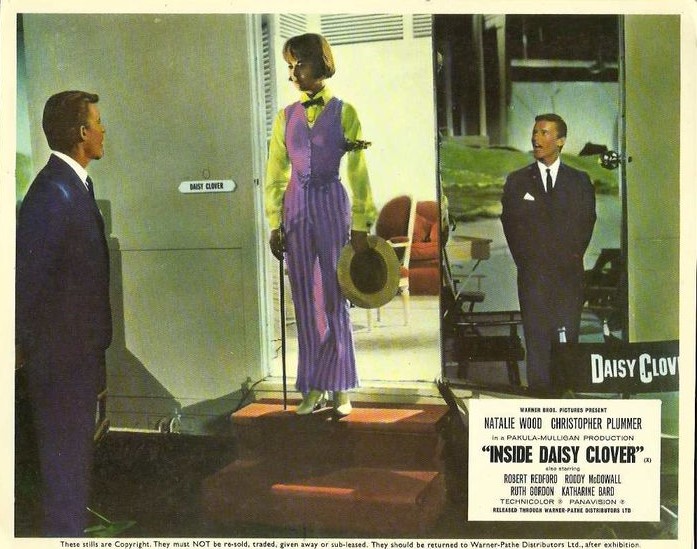
Inside Daisy Clover
(1965)

A 15-year-old tomboy dreams of being a Hollywood star. After auditioning for a famous producer, she becomes the toast of Hollywood. She must then come to terms with her newfound fame and the rigors and the hollowness of the 1930's Hollywood star treatment.


This drama, based on Gavin Lambert's 1963 novel of the same name, was directed by Robert Mulligan and stars Natalie Wood. Christopher Plummer Robert Redford, Roddy McDowell and Ruth Gordon.


Elizabeth Hartman and Patty Duke were two of the actresses considered for the lead role. In the movie, the title character is only 15 years-old when she is signed by Swan Studios. At the time of the movie's release, Natalie Wood was almost twice that age: 27 years-old.


Robert Redford's agent tried to dissuade him from appearing in the film. Redford accepted the role on the proviso that the script was altered to tone down his character's sexuality - which was gay in the original book. Warner Bros., fearful of the potential controversy, insisted that the film only acknowledge the character's bisexuality through brief and oblique lines of dialogue. To Redford's dismay, after his footage was completed, a new line was scripted and shot which left no question that his character was bisexual.


Wood had developed a friendship with stage actress/writer Ruth Gordon and insisted Gordon portray her mother in the film, much to the chagrin of the studio, which wanted a name actress in the role.


As  Wood and Redford were shooting in a small boat off Santa Monica Pier, a sudden change in the wind direction cast them adrift in the Malibu current. As the boat moved further out to sea, Wood began to panic. However, Redford got her to laugh, humoring her through it. He later realized how precarious the situation was but it sealed the friendship between the two as his actions impressed Wood and he earned her lifelong trust.


Twenty-one minutes of footage were cut prior to release. The film had multiple endings, with the title character's botched suicides and the eventual blowing up of the beach house getting the best audience reaction.

This film was made between two of Wood's own suicide attempts (November 1964 and January 1966). She got through filming with pills and daily analysis.


Based on the 1963 novel of the same name by veteran Hollywood screenwriter and biographer Gavin Lambert, which was set in the 1950's rather than the 1930's. As a result of working together on this film, Lambert and Wood would also become lifelong friends, and Lambert's last completed book was a comprehensive and well-received biography of Wood.


Although it has achieved a degree of success as a cult film of sorts over several decades, upon its intial release, this film was considered a major failure, garnering mediocre reviews and grossing only about one third of its $4.5 million production budget.


Most of Wood's singing was dubbed by vocalist Jackie Ward. Vocal recordings completed by Wood of the film's songs went unused and unheard until the April 2009 release of the complete dramatic score and song score by Film Score Monthly.


--- ---


As they struggle to survive day-to-day life in the expensive and difficult world of Paris, the fantasies and dreams of two over-the-hill actresses who are roommates become intertwined with reality. In the end, their struggles are eased when the widow of a man they'd both been married to brings them their inheritance.


This art film was directed by Paul Vecchiali and stars Hélène Surgère, Sonia Saviange and Huguette Forge. Vecchiali was known for his low-budget, but thoughtful, artful films. Think of him as France's answer John Waters, but with better taste.

Hélène Surgère and Sonia Saviange


--- ---

Anna
(1987)

A middle-aged foreign actress is searching for work in New York City, with the help of her sometime lover, however, the only job she can find is that of an understudy. You see, after the 1968 invasion of Czechoslovakia, the actress was imprisoned and eventually exiled. Before then, she was a major Czech film star, married to a very famous director who was also exiled and is now reduced to making commercials in New York. The actress happens to meet and takes under her wing a young girl who has just arrived from Czechoslovakia, and speaks no English. The actress and her sometime lover help the new arrival learn English, putting her on the road to a promising acting career, all the while the aging former Czech star feels more and more marginalized.


This comedy/drama was directed by Yurek Bogayevicz and stars Sally Kirkland, Robert Fields, Paulina Porizkova, Steven Gilborn, Sophia Coppola and Larry Pine. It served as Bogayevicz's directorial debut.


The film is loosely based on the life of Polish actress Elzbieta Czyzewska, who had trouble establishing herself as an actress in New York after fleeing her homeland. She made a comeback after the film's release, winning an Obie Award for her performance in the play Crowbar, and appearing in movies like 1988's Running on Empty and 1989's Music Box. She was originally cast as the lead in this film, but was replaced by Sally Kirkland. Paulina Porizkova plays a character based on actress Joanna Pacula.


In an interview with The Huffington Post, actress Sally Kirkland said: ''When I first read the script by Agnieszka Holland, I thought whoever plays this role has a shot at the Oscar. It was just intuition. In the earlier days when we didn't have any publicity, I called friends including Andy Warhol who put me on his TV show. Joan Rivers did too. At Cannes, I ran into Rex Reed in an elevator and begged him to see it. He did, and he lent me this quote 'Sally Kirkland devours Anna like a raw steak and emerges a major star.' Then Norman Mailer gave me a quote. We had pooled enough money for a black and white ad trade campaign. Dale Olson, Shirley MacLaine's publicist, encouraged me to go for the L.A. Film Critics Awards. So I wrote them all letters, and said this is a tiny little film but I hope you'll see it, and I ended up tying with Holly Hunter [from Broadcast News] for that. Then we screened it for the Hollywood Foreign Press and their response was extraordinary. At the Oscars, there were all these movie stars emerging from their limos, and then there was me. I felt like Cinderella. The greatest part was the feeling to be in the same Oscar category of these women that I was a huge fan of -Meryl, Glenn, Holly Hunter and Cher, who I used to roller-skate with in the '70's.''


The film was nominated for one Academy Award in 1988 for Sally Kirkland in the category of Best Actress in a Leading Role. It was also nominated for one Golden Globe Award in 1988 in the category of Best Performance by an Actress in a Motion Picture - Drama, which Kirkland won. At the Los Angeles Film Critics Association Awards in 1987, Kirkland also won the Best Actress award in a tie with Holly Hunter for Broadcast News. In addition, Kirkland received an Independent Spirit Award for Best Female Lead.

Paulina Porizkova and Sally Kirkland

--- ---

And that's all for now.

Tune in next time.

Same place, same channel.

--- ---

You're Gonna Hear From Me - Natalie Wood
from the 1965 motion picture Inside Daisy Clover
(Her own voice.)

The Circus Is A Wacky World - Natalie Wood
from the 1965 motion picture Inside Daisy Clover
(Her own voice.)