Followers

Total Pageviews

Showing posts with label Charts. Show all posts

Saturday, March 21, 2026

Wonderland Burlesque's Down The Rabbit Hole: Captain Jack

Wonderland Burlesque's
Down The Rabbit Hole
Captain Jack

Captain Jack is an American-German Eurodance and dance-rock project formed in Darmstadt in 1995. The project is best known for its single Captain Jack, which reached the top 10 in many countries in Europe. During their initial years, they managed to rack up  six Top 40 hits in Germany and the Netherlands and nine in Austria.

Captain Jack's music was stylized as a form of military training mixed with Europop, dance-rock and dance pop music. They were musically influenced by the eurodance genre that was popular in Europe, Oceania, and South America in the 1990s. The style of eurodance was dance music with a female singer and a male rapper to follow a traditional verse-chorus structure.

The original group consisted of Sharky Durban and Liza da Costa. They recorded the songs Dam, Dam, Dam and Captain Jack, which snagged the #1 spot in the Netherlands, the #2 spot in Belgium, the #3 spot in Germany, #5 in Norway and #6 in both Switzerland and Austria.

After their debut album, Sharky left the group and was replaced by Francisco Gutierrez AKA: Franky Gee. Gutierrez and Liza da Costa released the albums The Mission and Operation Dance and the singles Drill Instructor and Holiday before Liza da Costa left in December of 1998. Drill Instructor matched Captain Jack's success on the charts, while making inroads to Finland, where they would enjoy a string of five Top 40 hits.

Liza da Costa was replaced by the singer Maria Lucia Lozanes AKA: Maloy. The duo released one album, called The Captain's Revenge, and three singles: Dream a Dream, Get Up with the Gipsy Kings, and Only You, before Maloy left in November of 2000.

Ilka Anna Antonia Traue, alias Illi Love, joined and stayed until 2005 - releasing five albums and numerous singles. Love was replaced by Sabine Repas and soon after, Franky suffered a cerebral hemorrhage. Doctors predicted that the damage was fatal, and Franky Gee died at the age of 43 on Saturday 22 October 2005, after spending five days in a coma, bringing to an end the group's initial period.

The producers, with new talent on board, revived the group in 2008 and have been active since, releasing new material sporadically while making the occasional festival or club appearance.

Captain Jack - Captain Jack

Drill Instructor - Captain Jack

Soldier Soldier - Captain Jack


Get Up - Captain Jack

Iko Iko - Captain Jack


--- ---
Sunday, September 28, 2025

Wonderland Burlesque's Down The Rabbit Hole: Noisettes

Wonderland Burlesque's
 Down The Rabbit Hole: 
Noisettes

Down The Rabbit Hole merely places a spotlight on something slightly unusual that's caught my interest. With the help of Wikipedia, YouTube, and other sites, I gather information and learn something new.

Today, we take a look at the multi-influenced music of the phenomenally talented Noisettes.

--- ---

From Wikipedia and other sources:

Noisettes are an English indie rock band from London composed of singer and bassist Shingai Shoniwa and guitarist Dan Smith - and, at one time, drummer Jamie Morrison.

Formed in 2003, the Noisettes gradually formed a reputation for being one of the rowdiest live acts in London. Early feedback about the band was largely positive. Entertainment Weekly placed the band on its November 2005 list of Six Indie Brit Bands on the Cusp, and said the band possessed a "sound like high-drama, heavily syncopated swagger-and-sway rock, spearheaded by incandescent frontwoman Shingai Shoniwa." In a March 2006 article on UK bands, USA Today said, "The incendiary Shingai Shoniwa leads this London blues-punk band, known for its feral and explosive live show."

Ever evolving, the group would eventually showcase Shoniwa's unique vocal style with a sophisticated blend of new wave, D,I.Y. punk, rock-a-billy, mersey beat, and vintage soul, with elements of dance, rock and pop. Theirs is a truly unique sound with Shoniwa serving as the perfect visual embodiment.

The group released two EPs, one in 2005 and one in 2006. The latter was used to showcase material for their debut album, What's The Time, Mr. Wolf?, released on Vertigo in February of 2007. Their commercial breakthrough came with their second album, 2009's Wild Young Hearts and its second single Don't Upset The Rhythm (Go Baby Go) which snagged the #2 spot in the UK and the #8 spot in Ireland. The song had been featured in a Mazda 2 television ad. A follow-up single, Never Forget You, also did well on the charts, peaking at #20 in the UK, #24 in Ireland, and #25 in Belgium and was featured in a DFS furniture advertising campaign - and later, served as the jingle for a TV commercials and all-media marketing campaign by Vodafone in Italy.

In January 2010, drummer Jamie Morrison abruptly left the band, leaving Shoniwa and Smith to soldier on as a duo. Biding their time, a couple of one-off's were recorded - the cover of a Buzzcock's song and a newly recorded version of their song Sister Rosetta which then appeared on the soundtrack for the 2011 film, The Twilight Saga: Breaking Dawn - Part 1.

New music surfaced in 2012.The album, entitled Contact, was released on August, 27, 2012. It received generally positive reviews, but failed to match the commercial impact of their previous album, charting 23 places lower and peaking at #30 on the UK Albums Chart. The lead single from the album, That Girl followed suit, peaking at #87 on the UK Singles Chart. 

Since that time, Shoniwa has released an EP in 2017 and her solo debut album in 2020. As of this writing, Noisettes remains a viable duo.

Don't Give Up - Noisettes

Wild Young Hearts - Noisettes

Don't Stop The Rhythm (Go Baby Go) - Noisettes

Never Forget You - Noisettes

Winner - Noisettes

That Girl - Noisettes


--- ---

Sunday, July 27, 2025

Wonderland Burlesque's Down The Rabbit Hole: Mary Jane Girls

Wonderland Burlesque's 
Down The Rabbit Hole: 
 Mary Jane Girls

Down The Rabbit Hole merely places a spotlight on something slightly unusual that's caught my interest. With the help of Wikipedia, YouTube, and other sites, I gather information and learn something new.

Today, we take a look at the work and history of the audacious Mary Jane Girls

--- ---

From Wikipedia and other sources:

The Mary Jane Girls were an American girl group formed in 1983, best known for their songs In My House, All Night Long, Candy Man, and their cover version of Walk Like a Man. They were protégées of musician Rick James and disbanded in 1987.

In 1983, Rick James proposed to Motown that Joanne McDuffie, his on-going backup singer, be offered a solo career but miscommunication caused the label to sign an all-female group, which became the Mary Jane Girls. The group consisted of members Joanne "JoJo" McDuffie, Cheryl Ann "Cheri" Bailey, Candice "Candi" Ghant, Kimberly "Maxi" Wuletich and Yvette "Corvette" Marine.

Joanne "Jojo" McDuffie was the lead singer, with the others filling out the group's style and appearance. On the studio recordings, McDuffie was backed by session vocalists rather than the other Mary Jane Girls. James wrote and produced the group's material. James said of the group, "I wanted there to be a Black female group in the industry that could express more reality with relationships to men. I wanted there to be Black girls who could really speak about love, the pain, money, power, hate and everything. Originally there were going to be three girls in negligees doing the punk thing."

Their first album was released in 1983, yielding the R&B hits All Night Long, Candy Man, and Boys In live performances, the Mary Jane Girls were backed by James' group the Stone City Band.

A second album was released  in 1985. It contained In My House, which became the group's biggest hit, reaching #3 on the R&B chart and then crossing over to the Billboard Hot 100 chart, where it reached #7 , spending 12 weeks in the Top 40. It also charted on the Hot Dance Club Play chart, peaking at # 1 for two weeks in April of 1985.

The group recorded a third album – which was shelved for decades but finally released in 2014 as part of a larger Rick James retrospective. However, a single was released from the project in 1986, a cover of The Four Seasons hit Walk Like a Man, which was heard in the film A Fine Mess. It charted at #41 on the Billboard Hot 100. Another single, Shadow Lover, was also released in 1986, but with no label support and on-going issues between Motown and Rich James, the group disbanded in 1987.

The group was inducted into the Rhythm & Blues Music Hall of Fame in 2019.

--- ---

Candyman - Mary Jane Girls

All Night Long - Mary Jane Girls

Boys - Mary Jane Girls

In My House - Mary Jane Girls

Walk Like A Man - Mary Jane Girls


--- ---

Sunday, January 26, 2025

Wonderland Burlesque's Down The Rabbit Hole: The Mavis's

Wonderland Burlesque's 
Down The Rabbit Hole
The Mavis's

Down The Rabbit Hole merely places a spotlight on something slightly unusual that's caught my interest. With the help of Wikipedia, YouTube, and other sites, I gather information and learn something new.

Today, we take a look at The Mavis's.

--- --

The Mavis's were an Australian rock band formed in Ballarat, Victoria, in 1987. Founding mainstays are Becky Thomas on vocals and keyboards, her brother Matt Thomas on guitar and vocals, and Andrea Vendy on drums. They released three studio albums and enjoyed a great deal of success in the late 1990s. After a farewell tour of Australia, they disbanded in December of 2001.

The group's overall sound has been described as: "ABBA meets ELO" (a bit of a stretch).

In early 1993, they released their first extended play, Spindrift. Cameron Adams of Beat Magazine described it in February of 1993 as: "Recorded live at The Empress – and sounding all the better for it – The Mavis's make pop which is edgy and ace fun. From the rollicking Spinning Top to the very cool Bless My Soul it is a fine EP. Best of all is the opener Juggernaut, all harmony and melody."

A second EP, Poseidon, was released in May of 1994. Jeff Jenkins of In Press Magazine described it thusly: "This is pop that also rocks. It's dreamy, but it also knows when to poke you in the chest. These guys are great." X-Press Magazine's Lucy Morris felt that it "contains six refreshingly exciting, highly addictive, punchy pop songs which should at least earn them the tag of 'a band to look out for'. This is simply one of the best Australian releases for ages. It's the perfect marriage of post punk artiness and classic pop melodies with bucket-loads of energy to boot."

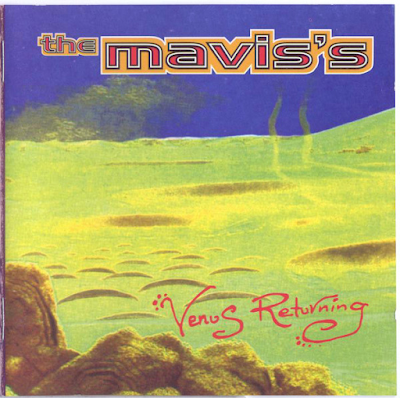
The group signed with Mushroom Records' White Records label in 1995, releasing their debut album, Venus Returning, in May of 1996. A 

 In April 1998 they released their second studio album, Pink Pills, which reached #12 on the ARIA Albums Chart. The second single from the album, Cry snagged the  #13 spot on the ARIA Singles Chart. That same year, at the ARIA Music Awards, the Mavis's received four nominations. 

After the album's release, the band toured in support of Kylie Minogue, and later backed Green Day on their Australian tour.  

Moving toward the millennium, the group contributed a couple of songs to tribute  and soundtrack albums, along with a pair of songs used by Hyundai and Coke for commercials.
 
Issues with their label delayed the release of their third album, Rapture, which was finally released until March of 2003. The tour to support the album turned into their farewell tour and the group disbanded.   
  
On December 27, 2014, the Mavis's reformed, with original members Beki, Matt and Nik joined by additional musicians, for a one-off show in Melbourne. And in 2018, the band reunited once again to commemorate the 20th anniversary of Pink Pills. The Thomas siblings and Gill performed the album in its entirety for the tour.

--- ---

Thunder - The Mavis's
 
Cry - The Mavis's

Naughty Boy - The Mavis's

Lever - The Mavis's

Coming Home - The Mavis's

Happiness - The Mavis's 


Wednesday, August 02, 2023

Who Did It Better? Love On A Two-Way Street

Who Did It Better?
Love On A Two-Way Street

Today, we take a look at a little pop gem which got two tickets to the US Top 40, but not by the original artist who recorded it first and co-wrote its lyrics. We also get treated to a little bit of show business drama; a songwriting conflict as old as music itself, based on a brief testimonial from that same artist who almost didn't get credit for her contributions to the song.

This one goes out to my dear friend, Randall. Bless him. As a mere babe, during his very first visit to a gay bar, he fell in love with a hustler sitting on a bar stool as this song played on the juke box. Ah, young love! How it lingers... like crabs! My heart to you, boo. 

Love On A Two-Way Street was written by Sylvia Robinson, Lezli Valentine and Bert Keyes.

The song was first recorded by Lezli Valentine in 1968 for All Platinum, the record label that Sylvia Robinson co-owned with her husband, Joe. Sylvia Robinson was also a recording artist, using her first name only. She would enjoy a Top 10 hit with Pillow Talk in 1973. Valentine was a member of two singing groups: The Jaynettes who had a #2 hit with Sally Goes Round The Roses in 1963 and The Hearts who scored with Ooo-Wee in 1955. 

Valentine was backed by Willie and The Mighty Magnificents with Bert Keyes on piano. Keyes also  created the string arrangement which was overdubbed onto the track.  

Despite Valentine's contributions to the song, apparently there were issues with the songwriting credits. 

According to Valentine:

"Sylvia came into the office on the morning Two Way Street was created and said that she had a dream, but that the only thing she remembered was "Love on a Two-way Street, Lost on a lonely Highway." We went into Bert's office... Sylvia asked Bert to play what he felt (that became the melody)... I, Lezli Valentine, began to write the story line. "True love will never die, so I've been told but now I must cry, it is finally goodbye, I know. With music softly playing his lips were gently saying honey I love you". Sylvia wrote, "He held me in desperation, I thought it was a revelation and then he walked out". I, Lezli Valentine wrote, "How could I be so blind to give of love the very first time, to be fooled is a hurting thing". Sylvia wrote, "To be loved and fooled is a crying shame". Lezli Valentine wrote, "While I bear the blame, as he laughs my name". The rest was completed. I recorded it. The lead sheets were hand delivered by one of the original Moments, John, who lived in DC. The original application was altered without my knowledge (omitting Lezli Valentine's name as a lyric writer.)  There are three writers on I Found Love On A Two-Way Street; Joseph Robinson, Sr. definitely knew this. Joseph R.Robinson, Sr. said he would rectify this - evidently he never did. Each time I telephoned him on this he said he would take care of it, as did Ebert Mahon, AKA: Bert Keyes and several recording artists in the Soul Sound Studios at the time! This was nerve-racking and resulted in hospitalizations."

When Valentine's version of the song failed to chart, the song was then recorded by The Moments, an R&B vocal group who was also signed to All Platinum via a subsidiary, Stang Records. The Moments were previously featured as part of the Who Did It Better? series, when we took a look at the pop song, I Don't Wanna Go. After several line-up changes, they began having much more success and later evolved into the group known as Ray, Goodman & Brown, who are primarily remembered for their Top 5 hit, Special Lady.

Love On A Two-Way Street was supposed to serve as filler for the group's 1968 album Not On The Outside, But On The Inside, Strong!. However, Sylvia and Joe decided to release the song as a single in March of 1970 - and good thing they did! It went on to spend five weeks at #1 on Billboard's R&B chart and reached #3 in the US on the Hot 100 and #13 in Canada. Certified gold by the RIAA for sales of one million copies, the song ended up being on of the hottest soul singles of the year.

In 1981, 14-year-old artist Stacy Lattisaw covered Love On A Two-Way Street.

Lattisaw was no one-hit wonder, releasing ten albums between 1979-1990, (seven albums at Cotillion and three at Motown) before retiring from the pop industry, to devote herself to gospel music. Her debut was recorded at the age of 12. During her career she worked with a number of topline producers, including: Van McCoy, Narada Michael Walden, Michael Masser, Kashif, John "Jellybean" Benitez, Steve Barri, Tony Peluso, Leon Sylvers, Brownmark, Vincent Brantley, Aaron Zigman, Jerry Knight, Ron Kersey, Lou Pace, Gordon Williams, Phillip Damien, Hubert Eaves III, Kenni Hairston, Trevor Gale and LeMel Humes.  

Her second Top 40 hit, Love On A Two-Way Street served as the lead single from her With You album. In the US, it peaked at #2 on the  R&B chart, #19 on the Adult Contemporary chart, and #26 on the Hot 100. In addition is squeaked into the Canadian Top 40 at #39.

It should be noted that there are also cover versions by The Lost Generation, jazz guitarist Grant Green, Gloria Estefan, Brenda K. Starr, and Boz Scaggs - but for this competition we'll keep it to only the three artists who released it as a single.

And that's the whole story.

Now? On To the competition!

The Song: Love On A Two-Way Street

The Competitors: Valentine vs. The Moments vs. Lattisaw 

 Love On A Two-Way Street - Lezli Valentine

 Love On A Two-Way Street - The Moments

 Love On A Two-Way Street - Stacy Lattisaw

Lezli Valentine

Dramatic opening. Sounds like a holiday number until that third chord. Such a classic sound and time. 

Oh, I think Ms. Valentine sounds oh, so fine. Makes me think of Darlene Love. 

The mix is not good, nor is the recording quality - but that is also part of it's charm. I enjoy that chugging piano and thwacked guitar. Trouble is, the vocal is mixed too low. Needs to be on top - where I can hear it. Maybe she needed to lean into the mic more? 

Overall it reminds me of the very early recordings of Burt Bacharach songs.

The arrangement is quite on point. Those strings? Mighty tasty and well-placed. 

Valentine gets pitchy now and then... especially when reaching for those notes in her lower range. 

Bottom line: what a great song. Constructed perfectly and this arrangement shows off its dramatic side wonderfully. 

Can't believe this didn't get airplay.

The Moments

Same opening... a little more with those strings on the bottom there churning away... 

Great voice. Placed in the mix perfectly. A lot going on in the middle of that mix, though. And, just so you know, this was to be such a nothing burger that the label just grabbed the backing tracks that were used for Valentine's version and had The Moments sing over the top of it. Remixed it a little and that was it. 

The sound brings to mind one of my all-time favorite hitmakers - The Stylistics. 

A bit of a muddle just before we launch into the first proper verse. 

Billy Brown, the lead vocalist, sounds heavenly, doesn't he?

I want to slow dance with someone! This is shoulder-clinging music. 

The backing vocals are a nice addition to that C-section. Although, I would have played with the syncopation a bit... sort of like bells ringing one after the other.

And it just continues to soar. Those strings sure sell this thing.

And the adlibbed  "bye-byes'? Priceless. 

Just lovely. A perfect slice of vintage pop. 

Stacy Lattisaw

A drum roll? Really? To launch this. Okay...

Oh, my - bit on the ponderous side, don't you think? Beefed up, but why? I keep expecting The Theme From Rocky.

She's got pipes. So pretty. And pure. And clean. That's a tasty sound. 

Don't agree with how she leans into 'highway' - practically making it three syllables. But, it's pop, so... 

As sung by a female voice it eliminates that hollow pitchiness that we hear when men sing falsetto.

Pitchy at the start of verse one. 

She loses strength in her bottom range, too. The arrangement is airtight and seamless - kind of lacking a certain authenticity. It feels a bit overwhelming given the obvious age of the singer. 

"Honey, I love you..." - nope, don't buy it.

It's weird. She sounds great, but she's not living in the song. She's hitting notes and singing syllables - frequently placing emphasis on the wrong one when it comes to the latter. 

I miss the backing vocals on the C-section. And, again, she's a young singer, like a young actor playing a much older part - the line readings simply aren't believable. 

Like the doubled-vocals. 

I do like when she stretches out a bit on "Lo-ove on a two way street." 

Huh. I thought they would do a build or something, given the instruments on hand, but the arrangement seems to be on cruise control. Only thing driving this is Lattisaw's vocals. 

Oh, gawd save me from a damn synth flute solo. Flutter butter. Ugh. I suppose it worked at the time when this was released. 

The ending? Meh. 

The Verdict

I thought this would be tougher. 

I love Valentine's version. That arrangement is spot on, which is why they didn't mess with it when The Moments re-recorded the song two years later. And Valentine actually has a lovely sound, but her vocals are lost in the mix, so it's difficult to get a proper latch onto them to analyze. What suffers most in her version is the song itself... the story simply doesn't come through - not because Valentine fails to tell it, but because we can't hear it. 

The Moments fair much better. It's a clear, clean reading, full of dramatic, romantic fun. That muck up just before verse one bothers me, but otherwise, how lovely is this? That C-section works perfectly and from there to the end it's magic time. 

Lattisaw is a young singer and her age betrays her time and again. I bet that later in life, singing this live, she changed things up a bit, because an adult does not sing like a child; adults typically make more musical sense of things. That is at the heart of the problem when listening to her version. Her voice? Pure. Lovely tone. But the interpretation of the material is not focused. She clearly does not, because she cannot at her age, live this song. It's a matter of experience. And while she does a perfectly fine job of singing it, she doesn't fool me for a second. 

So, this goes to The Moments, though I would love for someone to take Valentine's version apart and remix it. She deserved this hit. And credit for co-writing this amazing song.

--- ---

And that's enough of me.

Okay, your turn. You know what to do: leave your thoughts and choice in the comments section. I love to hear a second opinion. 

That's all for now.

Until next time...

Thanks for reading... and listening!

 Love On A Two-Way Street - Stacy Lattisaw

Wednesday, July 12, 2023

Who Did It Better? Darlin'

Who Did It Better? 
Darlin'

Some songs become perennial favorites because artists belonging to various generations keep them alive - and appearing on the charts. Such is the case with today's Who Did It Better? chestnut of a song, which surprisingly turns out to be the all-time favorite of a certain someone.

 Darlin' is a song written by Brian Wilson and Mike Love and recorded by the Beach Boys for their 1967 album Wild Honey


It began life back in February, 1964 under the title Thinkin' 'Bout You Baby. That version was first recorded in April of 1964 by Sharon Marie, a teenage singer Love had met in June of 1963 at a Beach Boys concert. Love would get her signed to the Beach Boys' label, Capitol Records, with Wilson working behind the board.

Sharon Marie

As Wilson recalled: "I was writing more in a soul/R&B bag. The horns were conceived as a Phil Spector kind of a horn thing. That song took about a week to write."

Unfortunately, the song and the singer went nowhere fast. 

Years later, Wilson revisited the song, taking inspiration from singer Danny Hutton, who, at the time, had a tendency to call everyone 'darlin'. It was Wilson's intention that Hutton and an early version of what would later become Three Dog Night record the song. However, though the group, then known as Redwood, did record a guide vocal, a completed recording never materialized. This was due to an intervention of sorts. Beach Boy members, Mike Love and Carl Wilson, sensing a potential hit, insisted that Brian focus his attention on producing work for the Beach Boys. In the end, the song was reserved for the next Beach Boys next album, with Carl singing the lead vocal.

In an interview, Wilson later recalled, "Darlin' was for Three Dog Night. They recorded it and said, 'No, you can have it.'  - so I gave it to Carl to sing." When asked what songs worked best for Carl Wilson's voice, Brian responded, "Wow, well Darlin', of course. Carl did an amazing vocal on that song."

Released on December 18, 1967 as the second single from Wild Honey with Here Today as the flipside, Darlin' peaked at #19 on Billboard's Hot 100 and #11 in the UK. It also hit #10 in New Zealand, #15 in Switzerland, #17 in the Netherlands and #28 in Australia. 

In 1968, The Paper Dolls, a British female vocal trio from Northampton recorded a version of Darlin' for their sole album Paper Doll House on Pye Records. The group had enjoyed a one-off hit, Something Here In My Heart (Keeps A Tellin' Me No) in the UK and the album followed. The name of the group was suggestive of 'dolly birds', a term which journalist Christopher Booker associated with "girls transformed into throwaway plastic objects." Comprised of lead vocalist Susie 'Tiger' Mathis, Pauline 'Spyder' Bennett and Sue 'Copper' Marshall, each member of the group was assigned a nickname, not unlike the Spice Girls three decades later.

1975 found former teen idol David Cassidy leaving his old label, Bell Records, for a fresh start on RCA. His first for his new label and fifth overall solo album, The Higher They Climb, The Harder They Fall was produced by Cassidy and Beach Boy member Bruce Johnston. While the album did little to reverse his fortunes in the US, overseas the album's singles did quite well - the second being the Johnston-penned I Write The Songs (the subject of a future Who Did It Better? post) and the third, a version of the Beach Boys Darlin'.

Cassidy's version of Darlin' would peak at #16 in the UK. In addition, it went #1 in South Africa, #20 in Ireland and #38 in Germany.
 
In 1977, Paul Davis, who had been recording since 1970 and enjoyed a number of minor hits on Bang Records, released his fifth album for the label, Singer Of Songs, Teller Of Tales, which included his breakthrough hit, I Go Crazy. His version of Darlin' would serve as the second single. Released on March 23, 1978, his take on the song, featuring Susan Collins, would land at #51 on Billboard's Hot 100 and #37 in Canada. 

Asked in 2015 which song that he'd written was his all-time favorite, Wilson cited Darlin', saying: "I just like the melody."

And that's the whole story.

Now? On to the competition.

The Song: Darlin'
The Competitors: The Beach Boys vs. The Paper Dolls vs. Cassidy vs. Davis

Darlin' - The Beach Boys

Darlin' - Paper Dolls

Darlin' - David Cassidy

Darlin' - Paul Davis

The Beach Boys

Those are some punchy horns. I am amazed Chicago never recorded this one. 

Great energy from the get-go. Now, keep in mind you are listening to a remastered version - so everything is super crisp and lively. Still, I have a feeling that's likely true of the original, too. This would have sounded great on AM radio - a real wake-up call. 

And Carl sounds in fine form on those first two lines, but then goes all pinched for the next two. He's a serviceable singer, but a bit limited. He sounds strained and strident throughout.

Interesting use of the bass clef on the acoustic piano.  

This brings to mind Spiral Staircases' More Today Than Yesterday and Chicago's Only The Beginning.

And, of course, the rest of the Beach Boys sound amazing as always when it comes to harmonies and backing vocals. So tight and precise. 

Wow.. and it fades away much too soon. 

Not my favorite Beach Boys recording by a long shot, but they're very focused here. Love the energy.  

The Paper Dolls

Oh, dear. Those horns. Very upper crust. And a flank of backing vocals, too. 

Susie Mathis has a lovely voice - a sweet smile to it - as striking as those bells which guide our way. Sounds a bit silly, but still appealing. They've sort of shorn off the edges a bit, no? 

I always love when the other two vocalists in a female trio - the ones assigned to backing vocals - chime in and sound just a tad bored. 

Okay... I love the backing vocals. They are so deadpan. 

As for the horns and strings... its variety show time, for sure. This arrangement is aimed at the cocktail party set. It has a lot of charm and captures an era perfectly. I would have loved a video of Mr. Humphries and Mrs. Slocombe, wearing party hats, drinking gin and sashaying to this. 

Oh, dear... that instrumental break goes nowhere fast. That's a shame. They should have brought back the bells and that trumpet and let them have a go at it. No energy. Such a waste... 

And the play off? Well... a bit of a shrug, isn't it? A tad undercooked.

David Cassidy

Now Bruce Johnston, who would have been singing a part of the harmonies backing Carl Wilson on the original, produced this version with Flo & Eddy from the Troggs (Wild Thing) on backing vocals. Flo & Eddy were in big demand for backing vocals during the day - as they worked with members of the Beatles, the Byrds, CSN&Y, the Who, Jefferson Airplane and The Doors, Nilsson, Alice Cooper, Blondie and Bruce Springsteen.

So, that's a drag race car being revved, believe it or not. Very tinny. And lots of reverb and a rather gothic cathedral reading to those intro vocals.

The arrangement and band are tight, but oddly mixed all in a jumble. Cassidy rides on top and is doing his smarmy/charming act. It's a pity he never took vocal lessons. Lots of bad habits, like leaning into his 'R's and he doesn't seem to know how to pop the top off a note. His worst being... and this is also part of his signature sound - he sort of locks his jaw or he sings from it... I'm not sure which. It inhibits sound and it is the reason he's not popping those notes - he's grounding his sound. 

He and Eddy & Flo sound great together. Lots of punch and energy. I like what the percussion is doing on the chorus... a lot. That said, I wish Johnston had found a way to blend the vocals together more on the chorus. I know I typically complain that there's not enough separation in a mix, but the opposite is true here. It lacks cohesion. Or maybe its an odd pairing? 

The instrumental break works, for the most part. Cassidy possesses a lot of charm and it serves him well, here. Very punchy. I keep using that word, but it's true. 

I know what it is on the chorus! Flo & Eddy are competing too much with Cassidy's lead. So dovetailing them into one another? Not a good idea... but turning the knobs down on Flo & Eddy might have fixed this. Yes, their energy is vital to the success of this, but toning them down might be what's needed. 

At the 2:50 mark, I am done with this. The Beach Boys ended at 2:13 and The Paper Dolls at 2:00 on the dot. So... why are we subject to another 30 seconds? Ah, because we return to the intro... twice. Actually... a nice touch. I like it. 

Paul Davis

Oh, lord no. Talk about taking all the fun out of something. And that female spoken word bit... ick. 

This is so weird. I hear the bell in there. Is this... is this disco lite? This is what disco would have been had funk and soul not had a lot of influence. 

Oddly enough, Davis has the vocal chops to pull this off. Maybe. His vocals are so oddly treated. Weird that the keyboards are doing the counter melody. This sounds like someone took a hot iron and flattened a fun time. 

Collins is okay. She sings in a straight line, though. But I do like her rasp. Suzi Quatro would have been an inspired choice.

The backing vocals are a bit too Vegas for me. Nothing organic about this. I think that's what makes Cassidy's version and the original work so well.. they're very in the moment, very 'live' feeling. This is sort of sugar-coated and somewhat brightly colored - you know, like cereal with no nutritional value whatsoever. 

UGH. A saxophone solo? What in the world? OH. It's 1978. Everything had a sax solo, thank you Gerry Rafferty/Raphael Ravenscroft and Clarence E. Clemons. And the vocals are dreadful. 

Nope. Can't with this. 

Collins isn't up to the task. She's a capable, limited vocalist, but she's having to compete with way too much trash instrumentation.

Oddly, this doesn't even work as variety show fodder, because it does such a disservice to the song. 

The Verdict

This didn't go the way I thought it would.

I adored Paul Davis' hit I Go Crazy. Played it on the piano and sang it over and over again. So, even though I've never heard the album it came from, I thought his would be the one I would like best... nope. 

The Paper Dolls, whose version is ten years older and aimed at the elevator music crowd sound more hip and interesting than Davis' take on it. That said, there is a definite appeal to The Paper Dolls recording - in a campy, cocktail lounge sort of way. 

Cassidy, Johnston and Flo & Eddy certainly mean well. And it's sort of fun, if you forgive all the poor choices made on the part of Johnston, and Cassidy's odd way of singing. The energy and spirit is there. 

And The Beach Boys are actually spot on - except Carl isn't a great vocalist either - not even as good as Cassidy. 

Of the voices here, Davis has the best pipes. But he's undone by a really crappy arrangement. Who thought that was a good idea? 

So... I'm going with Cassidy. The Beach Boys production and arrangement are stellar, but Carl sort of ruins it for me. I think had Brian sung lead, this would have been a huge hit and sounded even better. 

Cassidy's version has the same energy and drive that The Beach Boys brought to the table, plus his singing is better than Carl Wilson's. Oh, and I really like that intro/outro. Great idea and well executed.

--- ---

And that's enough of me.

Now? It's your turn. You know what to do; leave your thoughts and choice in the comments section. 

Until next time...

Thanks for reading... and listening!

Darlin' - David Cassiday feat. Flo & Eddie
1977