Lost Boys: Vintage Images of Roger

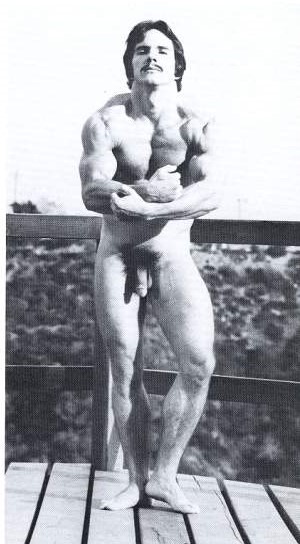
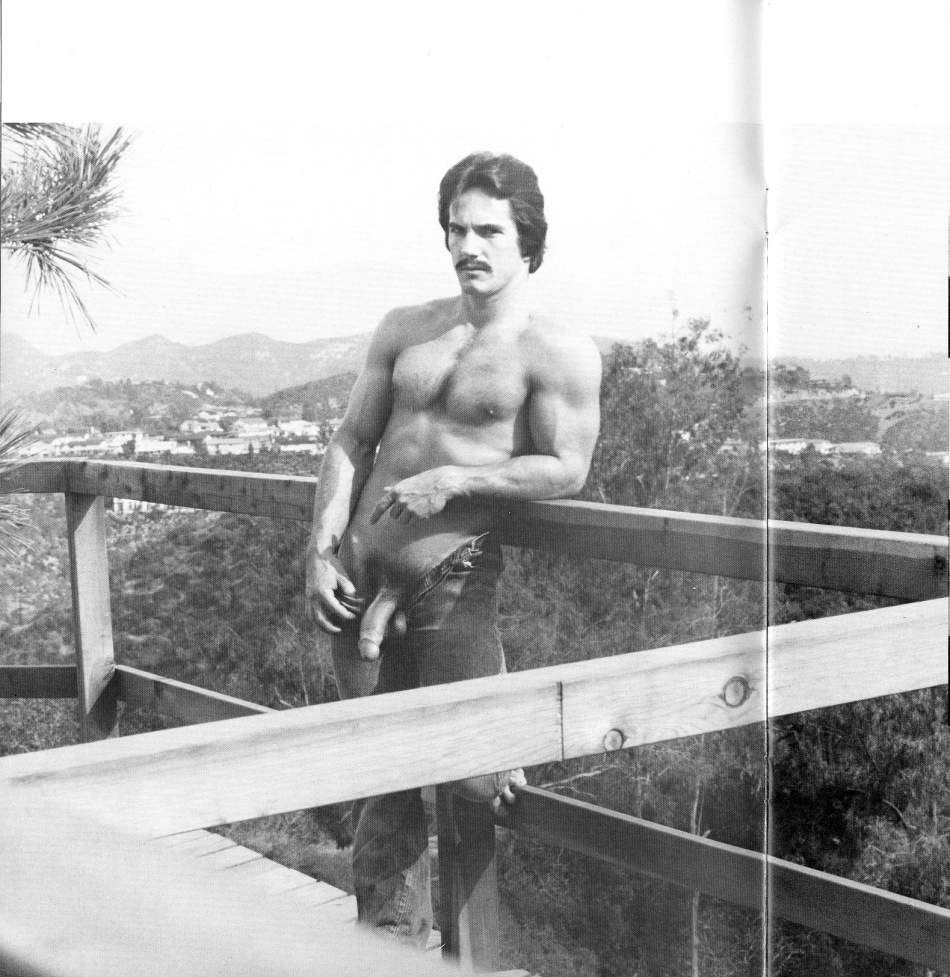
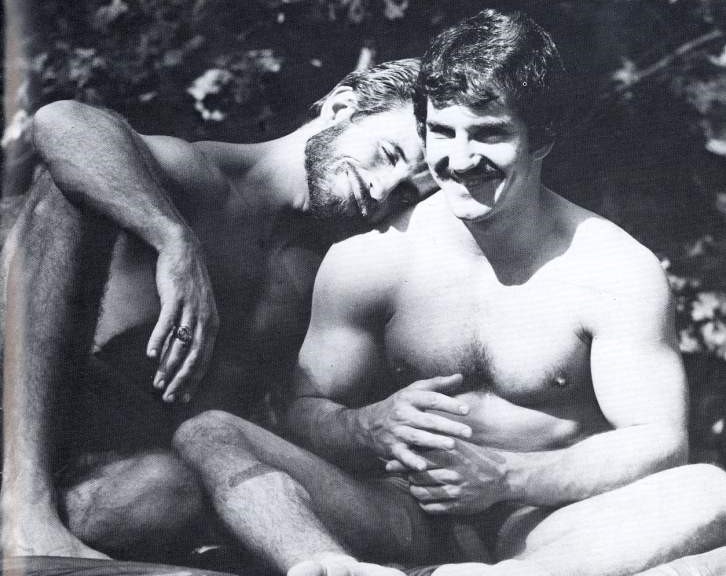
Roger, the one-named gay porn wonder, did not come into being on his own. He had plenty of help; industry stalwarts and a manager/lover who devoted their energies and talents in order to create a legend.
Who was the man beneath the famous physique? And what were the happenstances that conspired to forge this phenomenon of a man who captured the lust and attention of the gay community?
 Roger
Roger
Daryl Roger Hanson was born in Detroit, Michigan on New Year's Eve in 1954. He was the youngest of three brothers. In 1971, at the age of 16, he quit school and persuaded his mother to sign him up as a US Navy recruit. However, due to his involvement with drugs, he came under closer scrutiny by the powers that be and, within a year, the Navy issued him a discharge due to his status as a minor.
 Once on the streets, he made his way to Daytona Beach, Florida where he began dancing in a seedy topless joint - the kind with sawdust on the floor and go-go girls in cages. To augment his income he would also pose nude for local college art classes.
 BLUEBOY Feb/Mar 1977

AKA: Tom Garrett, Malo, Paul Malo, Daryl Hanson. Daryll Hanson, Daryl Roger Hanson
Birthdate: December 31, 1954
Birthdate: December 31, 1954
Birthplace: Detroit, MI
Death: 1982
Hair: Dark Brown
Eyes: Brown
Height: 5' 11"
Years Active: 1972-1980
Films: 14
Compilations: 10
Studios: Hand In Hand, Falcon, Target, YMAC, Advocate, Bijou, Bullet Productions, French Connection
Daryl Roger Hanson was born in Detroit, Michigan on New Year's Eve in 1954. He was the youngest of three brothers. In 1971, at the age of 16, he quit school and persuaded his mother to sign him up as a US Navy recruit. However, due to his involvement with drugs, he came under closer scrutiny by the powers that be and, within a year, the Navy issued him a discharge due to his status as a minor.

Soon the seventeen year-old caught the attention of an "aggressive, but not pushy" marketing man named Jim Bacon. In 1972, after watching the bar's stage show, the older Bacon tried three times to work up courage enough to follow the boy into the mens room. The third time did the trick; from that point on, the pair were inseparable for the next seven years.
The two hit it off immediately. After talking business, Bacon took over 2,000 Polaroid photos of his young charge "in every erotic pose possible." After adopting Hanson's middle name as his only name. Bacon took Roger and the 2000 Polaroids straight to porn kingpin, Don Embinder. Embinder appreciated what he saw. As publisher of the popular Blueboy magazine, Embinder was in the unique position to help launch a career in a big way. He ordered a photo shoot and put the unknown on the cover of Blueboy. The issue sold like hotcakes, garnering international attention. Yes, ladies and gentlemen... a star was born.
He would go on to do a number of photo shoots for Target and Falcon Studios, remaining a popular centerfold model throughout his career.
The two hit it off immediately. After talking business, Bacon took over 2,000 Polaroid photos of his young charge "in every erotic pose possible." After adopting Hanson's middle name as his only name. Bacon took Roger and the 2000 Polaroids straight to porn kingpin, Don Embinder. Embinder appreciated what he saw. As publisher of the popular Blueboy magazine, Embinder was in the unique position to help launch a career in a big way. He ordered a photo shoot and put the unknown on the cover of Blueboy. The issue sold like hotcakes, garnering international attention. Yes, ladies and gentlemen... a star was born.
He would go on to do a number of photo shoots for Target and Falcon Studios, remaining a popular centerfold model throughout his career.

BLUEBOY Apr/May 1977
MANDATE September 1977
BLUEBOY January 1978
MANDATE September 1978
HONCHO November 1978
BRONC September 1982
DRUMMER 021
IN TOUCH #30
NUMBERS: 100 NUMBERS #3
PLAYGUY (#5) v01 n05, (#7) v01 n07, (#9) v01 n09
STUDFLIX v03 n02
BLUEBOY PRESENTS ROGER
BLUEBOY: FOR WOMEN ONLY VOL. 1
BLUEBOY: THE BEST OF STEVE & ROGER
BLUEBOY POSTER: ROGER
TARGET: JAVELIN #3
 TARGET: LANCER #1
TARGET CALENDAR 1978
TARGET CALENDAR 1979
TBT-1: TARGET BY TOM
TOM GARRETT B&W Photo Set (PJ-02)
GARRETT & RAZ B&W Photo Set (PM-02)
TOM GARRETT Slide Set (SJ-02)
GARRETT & RAZ Slide Set (SM-02)
LANCER Slide Set (SO-05)
FALCON: ROGER & FRIENDS
BRUNO GMUNDER: ULTIMATE FALCON
GUISE
MASCULIN – MALES U.S.A – Jon Target
MAN’S IMAGE: TOP MAN
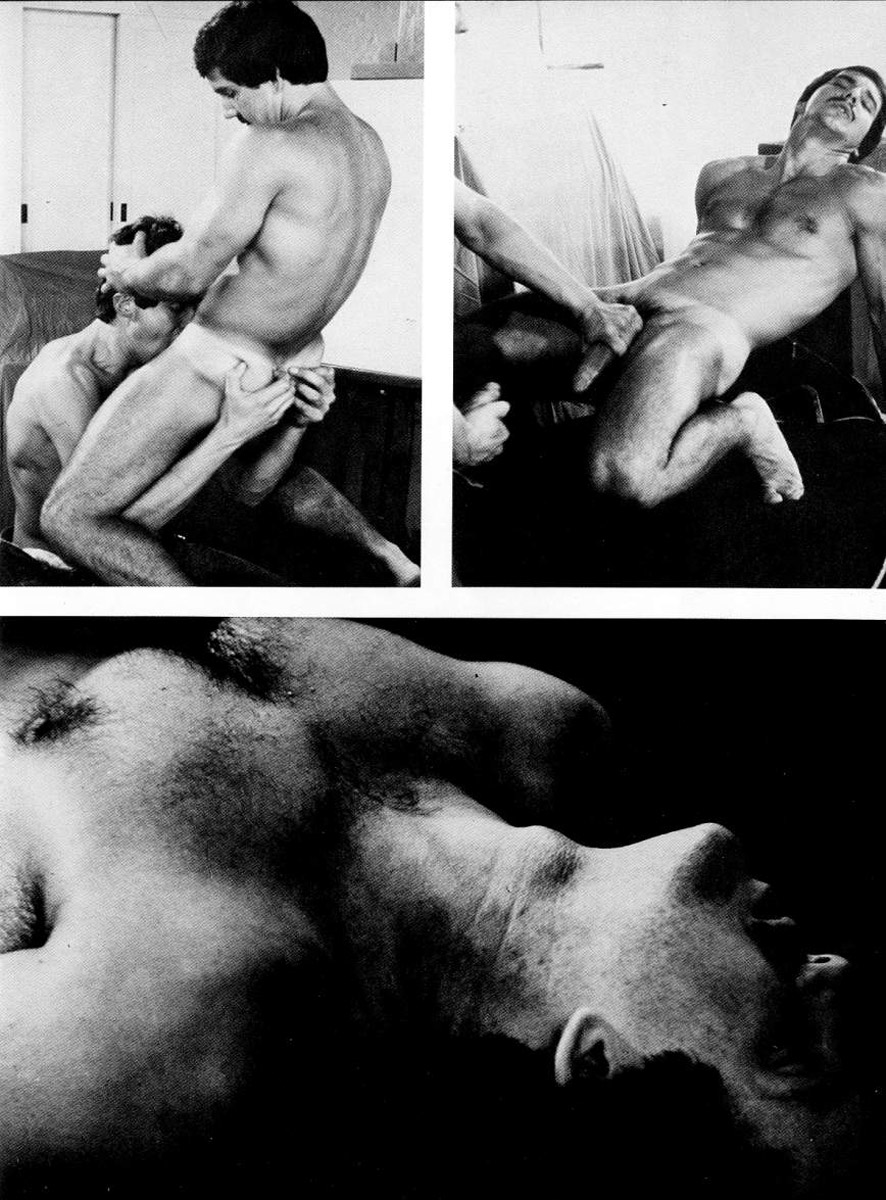
 Roger appeared in many film loops during the pre-condom era, co-starring with other notable porn stars of the time, including Al Parker, Jack Wrangler, Chuck Samson, and Bruno, while working with top directors like Jack Deveau and Wakefield Poole. The scenes he filmed for Target Studios would later surface as part of the Bullet Video series. In addition, he also shot two films for Hand in Hand Studios and several for Falcon. And even though COLT's Jim French had photos and film of the young star, due to the fact that Roger would not sign on as an exclusive model for COLT, none of it ever saw the light of day.
Deveau, owner of Hand In Hand films and something of an innovative maverick in the industry, was a favorite director of Bacon's. He shot Roger and Jack Wrangler in two 1977 films, Hot House and Sex Magic, both of which proved hugely popular, adding considerably to the Roger mystique.
1977
DRUMMER 021
IN TOUCH #30
NUMBERS: 100 NUMBERS #3
PLAYGUY (#5) v01 n05, (#7) v01 n07, (#9) v01 n09
STUDFLIX v03 n02
BLUEBOY PRESENTS ROGER
BLUEBOY: FOR WOMEN ONLY VOL. 1
BLUEBOY: THE BEST OF STEVE & ROGER
BLUEBOY POSTER: ROGER
TARGET: JAVELIN #3
TARGET CALENDAR 1978
TARGET CALENDAR 1979
TBT-1: TARGET BY TOM
TOM GARRETT B&W Photo Set (PJ-02)
GARRETT & RAZ B&W Photo Set (PM-02)
TOM GARRETT Slide Set (SJ-02)
GARRETT & RAZ Slide Set (SM-02)
LANCER Slide Set (SO-05)
FALCON: ROGER & FRIENDS
BRUNO GMUNDER: ULTIMATE FALCON
GUISE
MASCULIN – MALES U.S.A – Jon Target
MAN’S IMAGE: TOP MAN
BD-34 – Photos / CD-35 – Slides
 Roger and Bacon moved into a comfy home in Woodland Hills, California, complete with a pool and a well-stocked wet bar. The couple quickly became high rollers in industry circles, partying at their home with all the major players of the day - photographers, directors, stars and millionaires alike. Chris Dickerson, the black Adonis who was crowned Mr. America was one of their closest friends. “We all drank like fish,” Bacon said. ‘Our bar had a marble floor and it was always sticky from the spilled drinks.”
Lou Thomas, one of the co-founders of Lugar and COLT Studios in New York, who split from partner Jim French to start his own Target Studio, attended parties at the couples home, and after meeting the main attraction, wanted to get in on the ground floor. He often visited Bacon and Roger, bringing his cameras, lover, and a couple of additional models in tow. Thomas would shoot his Target loops right there, at the Woodland Hills pool. Oddly, Bacon’s mother, who lived with the couple, never copped to knowing what was going on. However, "she treated everyone as if they were members of her Sunday School class," Bacon said.

Lou Thomas, one of the co-founders of Lugar and COLT Studios in New York, who split from partner Jim French to start his own Target Studio, attended parties at the couples home, and after meeting the main attraction, wanted to get in on the ground floor. He often visited Bacon and Roger, bringing his cameras, lover, and a couple of additional models in tow. Thomas would shoot his Target loops right there, at the Woodland Hills pool. Oddly, Bacon’s mother, who lived with the couple, never copped to knowing what was going on. However, "she treated everyone as if they were members of her Sunday School class," Bacon said.

Deveau, owner of Hand In Hand films and something of an innovative maverick in the industry, was a favorite director of Bacon's. He shot Roger and Jack Wrangler in two 1977 films, Hot House and Sex Magic, both of which proved hugely popular, adding considerably to the Roger mystique.
1977
Adonis Cockplay 14
Heavy Equipment
 Hot House
Sex Magic
1978
Heavy Equipment

Sex Magic
1978
A Night at the Adonis
Academy
Double Whammy: House Painter
Dune Buddies
1979
Academy
Double Whammy: House Painter
Dune Buddies
1979
Boys From Riverside Drive
Sex Machine
1983
Sex Machine
1983
7 Up and Cummin
Bullet Videopac 5
Bullet Videopac 5
Bullet Videopac 7
Super Studs
 However, there was one aspect of Roger's career that set him apart from the competition - one might even say, a single moment.
Super Studs

Leaving Los Angeles for San Francisco, Bacon had just one thing in mind in order to solidify his rising star's status - a live show. At the time, San Francisco was to live gay porn shows what New York's renowned Broadway was to musical theatre - if you could make it there, you could make it anywhere. Bacon had convinced Cliff Newman, owner of the famed Nob Hill Theatre, to book Roger for an extended engagement sight unseen.
As director Wakefield Poole, who was brought in for support, recalls:
"When Roger arrived at the Nob Hill two days before his scheduled opening, he auditioned for Cliff. When Roger finished, Cliff said, 'If that's the act you intend to lay on San Francisco on this stage, you have your first week's guarantee and your ticket back. I suggest you use it. San Francisco will laugh you off the stage.'
I took a good deep breath and said to Roger, 'Now that Cliff has said that, I'll tell you what I think. You're a very hot man. You've got everything but backup to pull you off. If you're willing, Cliff and I are going to take you apart and put you back together.'
Roger was wonderful about it. He opened up. We added in the wet nylon beach pants and white headband that had made him famous on that center-spread Blueboy bicycle seat. We added in the beginning and closing classic muscle-posing presentation.
Such a hit! The audience tore the house down. Every night thereafter, Cliff kept working with the production, making the lights, sound, and visuals always a little different. He kept the act fresh. Roger ran for weeks to an SRO house."

Jack Fritscher of Drummer magazine once wrote: "In San Francisco, New York, Washington, and Los Angeles, Roger’s SRO appearances cause lines to rival Star Wars. At New York’s Jewel Theater, the crush of fans literally caved in the plate glass of the box-office. Any man who has seen Roger once will see Roger twice. Once is definitely not enough."

In addition to everything else Roger was busy doing, he also worked as an escort through ads in gay magazines, eventually becoming the star attraction at an exclusive male brothel. According to Fritscher an evening’s pleasure with the man would cost you around five hundred bucks.
All of this activity led to a couple of life changes for the young star.
 Bacon said that shortly after the San Francisco shows, with his popularity at an all-time peak, "Roger got very focused with bodybuilding, He cleaned up his act and didn’t do party drugs. He’d go to the gym by day and he’d come home at night."
A magazine profile published at this time, described Roger as "a health nut for vitamins, (who) doesn’t drink or smoke tobacco, and gets his main high from sex."

A magazine profile published at this time, described Roger as "a health nut for vitamins, (who) doesn’t drink or smoke tobacco, and gets his main high from sex."
Through it all - the whole rocket ride - his manager and lover, Jim Bacon was at Roger's side. During the seven years the pair were together they traveled throughout Europe, Japan, and Singapore. Occasionally they traveled as tourists, but more often than not, it was so Roger could perform at a given theatre. His show in Singapore, in particular, was a runaway smash.
 All this effort, drive and activity to promote and create Roger eventually took it's toll on the couple's relationship. In 1980, they split up, with Roger heading for the fast lane lifestyle of Las Vegas, claiming he was done with the gay porn industry. Once there, Roger explored his sexuality, and not just with the boys. He would go so far as to marry a young woman who left him six months after the ceremony. This seemed a tipping point, for it sent our young star into a tailspin.

After that point, without Bacon around to reign him or the focus of work, "Roger turned to speedy drugs and speedier company." It all ended quite badly.
In 1982, with two or three other people in tow, Roger was killed in a auto accident just outside Las Vegas' city limits.
He was only 27.

During the early days of the internet, a man posing as Roger ran a scam, offering to sell blurry photos to the gullible. In addition, in 2000, an imposter posing as Roger appeared on a number of Yahoo! groups. He told stories of having attended Al Parker’s memorial service in 1992, remaining in touch with co-star Jack Wrangler, and maintaining a monogamous relationship since the late 1980's while living in a suburb of Chicago. However, none of it was true and he was soon exposed as a fraud.
The truth is?
The comet known as Roger plummeted to earth, perishing in a desert outside Las Vegas, though his legend lives on in the carefully preserved photos found on the internet... the one place where no one ever dies.
--- ---

For me? I recall coming across the photospread Roger did in a suit. And while I appreciate his look and the quality of the photos (and that suit!), I must say, he never really did much for me. Whatever quality it is that others see which causes them to quiver? It's lost on me.
That's all for today.
Thank you for reading.
Starboy - The Weeknd feat. Daft Punk








feat. LeAnn Rimes