

Wonderland Burlesque's
Let's All Go To The Movies:
It's In His Kiss
Part XVIII
It's in his kiss.
Isn't that where it all begins?
A caress of the lips. A deep longing. Sharing a single breath?
On the silver screen such a kiss can be captured forever, frozen in time.
Or so these films would have us believe.
So, let's kiss and tell and spill the beans on these everlasting smacks, smooches, and snogs.
Yes, things can get pretty heated.
Chapstick exists for a reason, you know!
Grab a seat on the aisle.
Popcorn at the ready.
Pucker up and roll film!
- uptonking from Wonderland Burlesque
--- ---

A Kiss in a Taxi
(1927)
Ginette, a waitress at the Café Pierre, loves Lucien, a poor artist. She objects whenever someone pays too much attention to her beloved with whatever glassware is at hand. Though they love truly, Lucien's father forbids their marriage. Meanwhile, as Leon Lambert and a 'gay lady' are riding the boulevards, they stop at a florist's shop. At the same time, Ginette, pursued by her irate employer, runs down the boulevard and into their waiting taxi. Leon returns, offers a bouquet of flowers to Ginette - a total stranger - and forces a kiss. Shocked by this, the chauffeur, loses control of the taxi and crashes through the cafe window. To make amends, Leon buys the restaurant for Ginette, expecting her gratitude, but things only become more complicated and a slight deception is the only solution.

Based on the French play of the same name, which was produced on Broadway in 1925, this American silent comedy was directed by Clarence Badger and stars Bebe Daniels, Douglas Gilmore and Charlie Conklin.

A Kiss In A Taxi received generally positive reviews from critics upon its release. Much of the praise was directed at the performances of its cast. In The Healdsburg Tribune it was stated of Bebe Daniels in the role of Ginette: "The dark-eyed star presents one of the best characterizations of her career". The same article said: "Brilliant support is accorded by Chester Conklin, Douglas Gilmore, her new leading man, Jocelyn Lee, Henry Kolker and Richard Tucker". The humor of the movie was noted by reviewers, namely the large amounts of glassware shattered throughout the movie for comedic effect. The movie also received praise for its more action-filled moments, The Healdsburg Tribune, referring to the scene of the taxi crashing through the café wall, stated: "This brief action represents one of the most exciting bits of screen photography ever recorded".

Sadly, this is considered a lost film.


The Kiss Before the Mirror
(1933)
When a lawyer defending his best friend for murdering his unfaithful wife discovers how the accused discovered his wife was in love with another man, the lawyer begins to see the same patterns in his own wife's behavior, and suspects that she too is being unfaithful. Promising his friend that a defense of momentary insanity will acquit him, he also promises to kill his own wife if the defense actually works.

Adapted from the 1932 play by Ladislas Fodor, this American pre-Code mystery was directed by James Whale and stars Nancy Carroll, Frank Morgan, Paul Lukas, and Gloria Stuart.

Look familiar? The sets are the same ones James Whale used in Frankenstein (1931).

The film was remade by Whale five years later as Wives Under Suspicion (1937), starring Warren William and Gail Patrick.


Kisses for Breakfast
(1941)
Rodney has just married the often-engaged Juliette and they are ready to leave on their honeymoon. However, Clara shows up and Rodney sneaks out to talk to her. Clara is blackmailing Rodney, as he knew her before Juliette. Clara's accomplice hits Rodney over the head when he refuses to pay. This causes amnesia and the only name Rodney can find in his pockets is Laura Anders - who is Juliette's cousin. Laura has never met Rodney, so she doesn't know him at all. However, Laura and Rodney (still not remembering who he really is) get married on their way to Juliette's house. When Rodney is recognized everyone tries to keep Laura and Rodney from starting their honeymoon. Mayhem ensues.

A remake of the 1930 pre-Code comedy The Matrimonial Bed, based on an English stage play adaptation by Seymour Hicks (Mr. What's His Name) of a French comic farce, Au Premier de Ces Messieurs (To the First Husband), written by Yves Mirande and André Mouëzy-Éon, this American screwball comedy was directed by Lewis Seiler and stars Dennis Morgan, Jane Wyatt and Shirley Ross.


--- ---

I Wonder Who's Kissing Her Now?
(1947)
A biopic of the career of Joe Howard, a famous songwriter of the early 20th Century. He wrote the title song, Goodbye, My Lady Love and Hello, My Baby among many others.

This American historical musical film directed by Lloyd Bacon and stars June Haver, Mark Stevens, Lenore Aubert, Martha Stewart, William Frawley, Reginald Gardiner and Gene Nelson.

The film's working title was Hello, My Baby after the Howard tune Hello! Ma Baby. Producers Fred Finklehoffe and George Jessel worked on a screenplay on Joseph E. Howard's life for the first time between June and September 1945. Darryl F. Zanuck was unsatisfied and demanded rewrites.
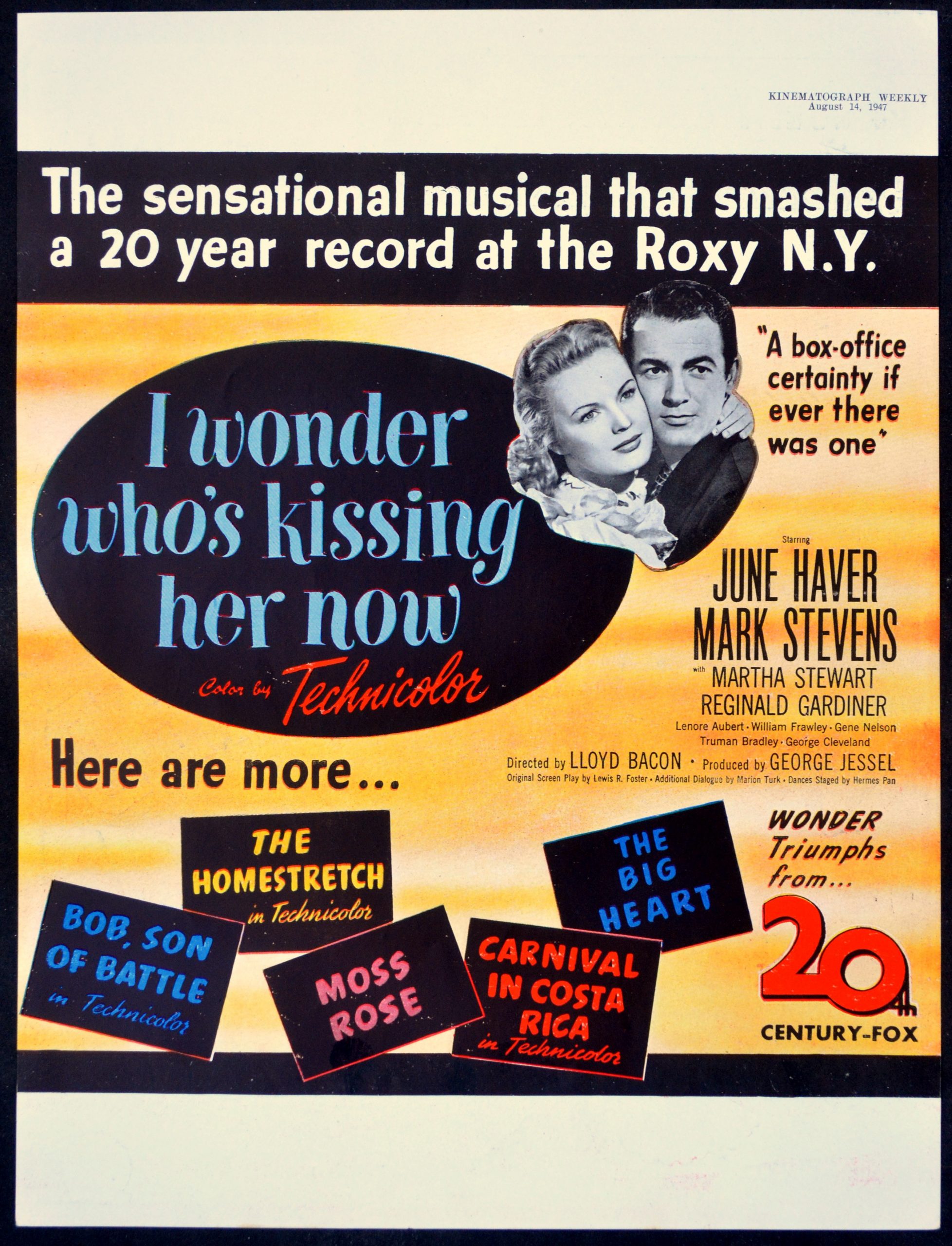
In October 1945, he advised the role of Katie be written into the film, with June Haver already in mind, though it was initially offered to Linda Darnell in July of 1946, who rejected it, because she felt it was "ill-suited" for her.
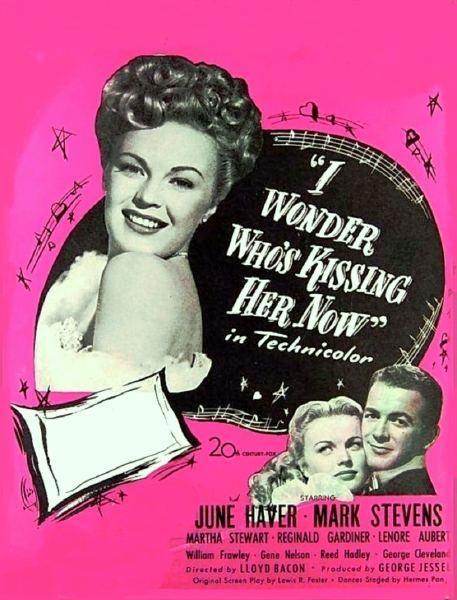
Jean Peters (Howard Hughes future wife) was supposed to make her screen debut in this film. She was originally cast in a role of an "ugly duckling", supported by "artificial freckles and horn-rimmed glasses".

The role of Lulu Madison was originally intended for Celeste Holm but pregnancy forced her to drop out. Martha Stewart replaced her.

Ilona Massey was the lead contender for the role of Fritzi Barrington. However Darryl F. Zanuck and the director choose Lenore Aubert, even though she was not as big a star as Massey. The real Fritzi Barrington was so happy with Aubert and the way she portrayed her, she personally thanked her and kept in touch with Aubert.

Mark Stevens was dubbed by Buddy Clark, a well known singer of the '30s and '40s.


--- ---

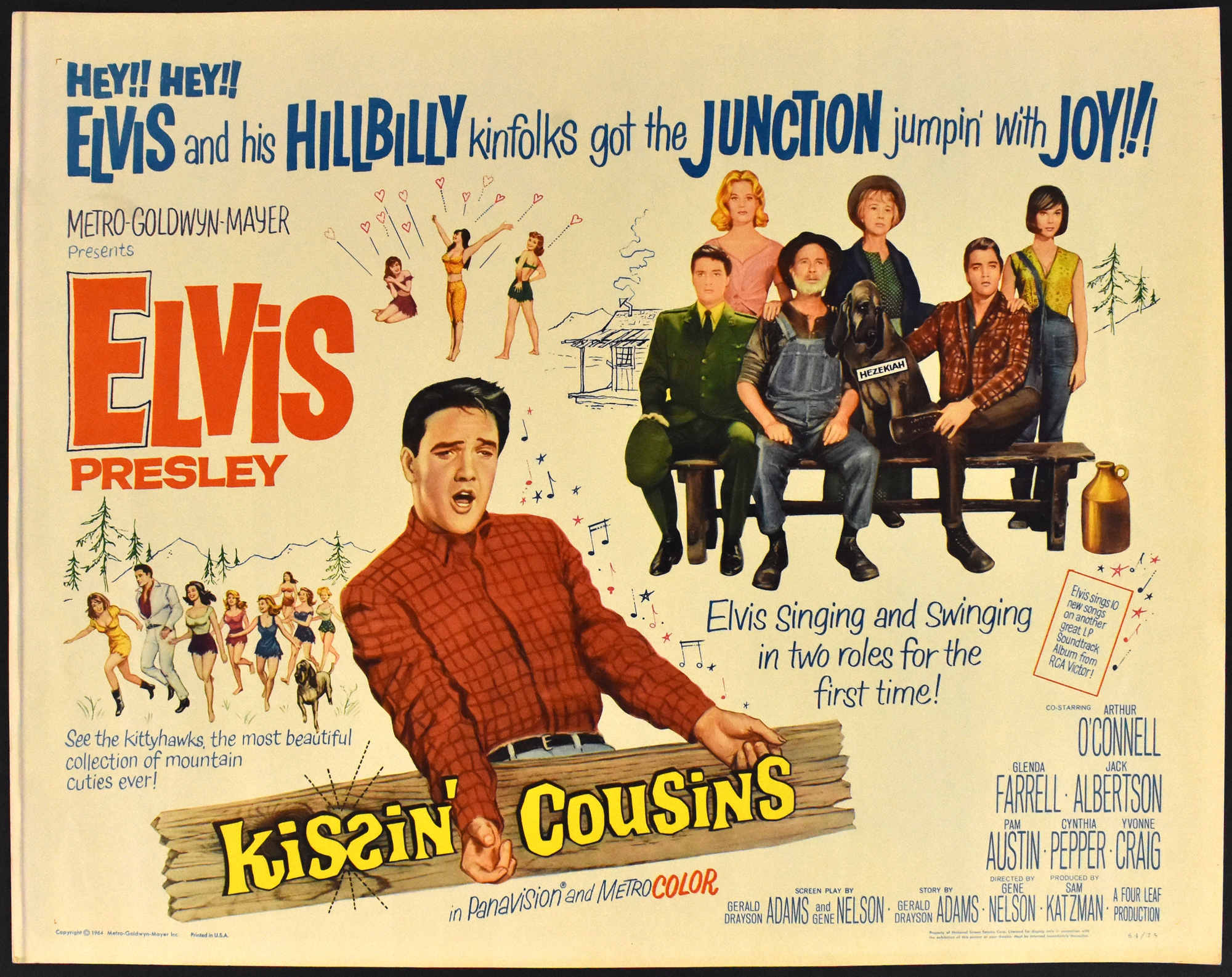
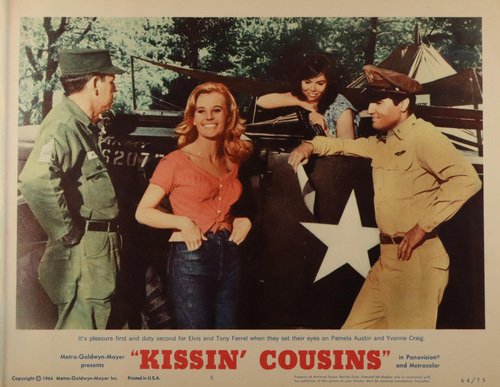
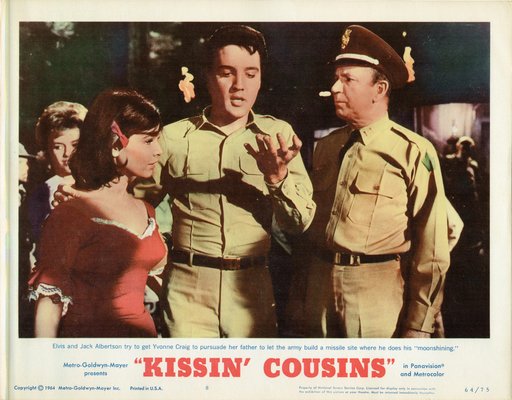
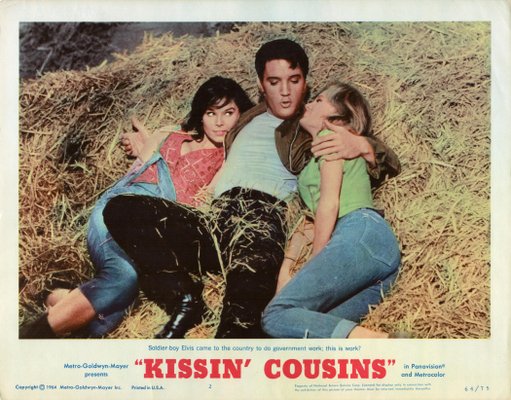
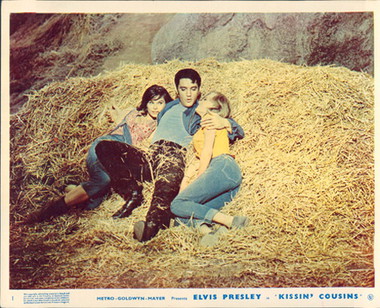
Kissin' Cousins
(1964)

ThisAmerican musical Panavision Metrocolor comedy was directed by Gene Nelson and stars Elvis Presley.

This film's director, Gene Nelson (who also co-wrote the screenplay), had been a singer/dancer and Warner Brothers contract player in the 1950s (see I Wonder Who's Kissing Her Now, above). He co-stared in four films with Doris Day and when his Warner contract expired, Nelson turned to directing, and had an equally successful career behind the camera. This was one of two Elvis movies he helmed (the other one was 1965's Harum Scarum).
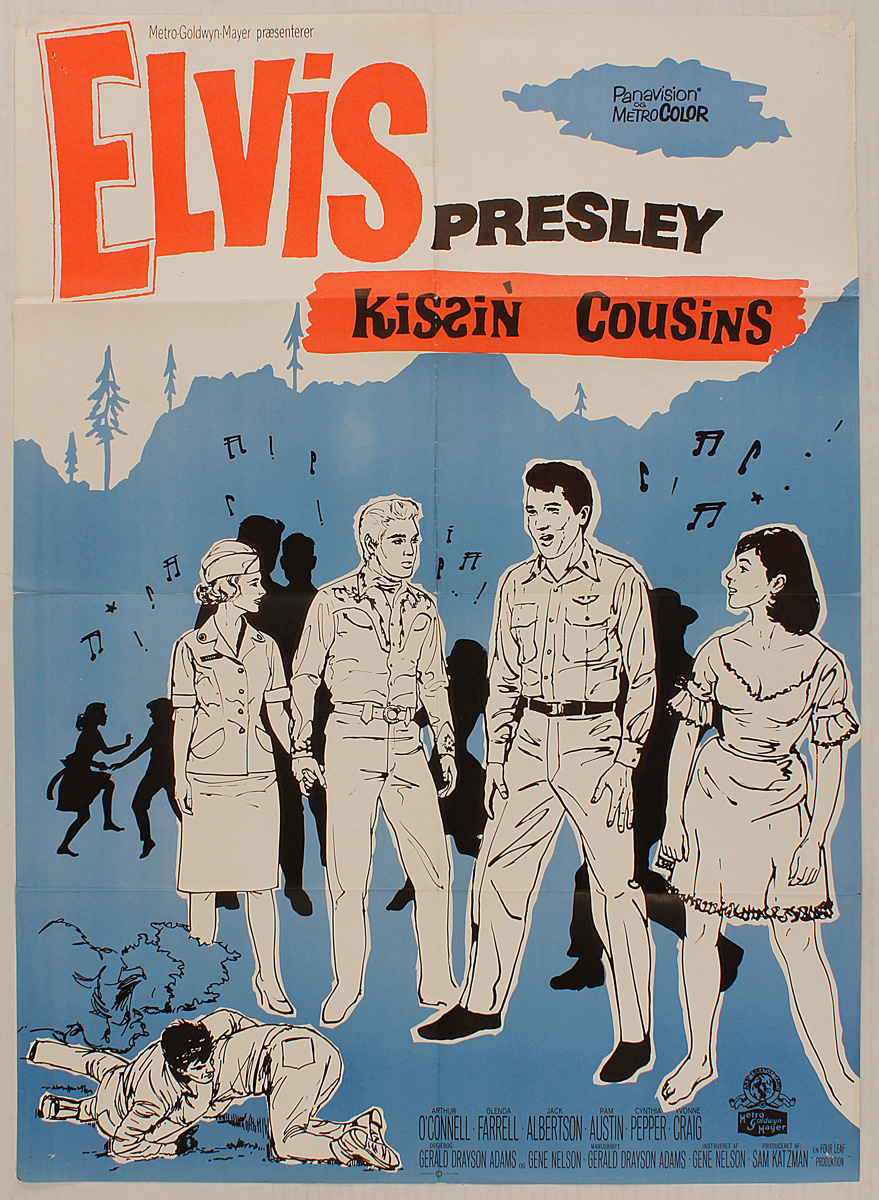
This film was produced by Sam Katzman who was known as the 'King of the Quickies'. This film was completed in 18 days.
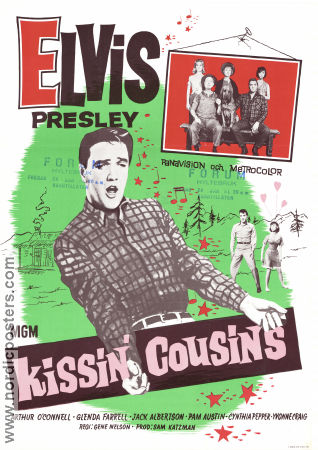
Because Presley's manager Colonel Tom Parker insisted on keeping the budget of all Elvis movies to a minimum, and a $750 optical was required to achieve the effect, the two cousins Presley plays are only seen together in the same shot four times--three in the beginning and once more at the end.
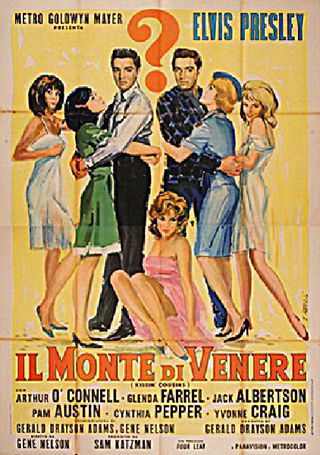
Elvis Presley supposedly loathed the strawberry blond wig he had to wear as the hillbilly cousin in this film, in part because it made him look as he had before deciding to dye his hair black in the mid-fifties.
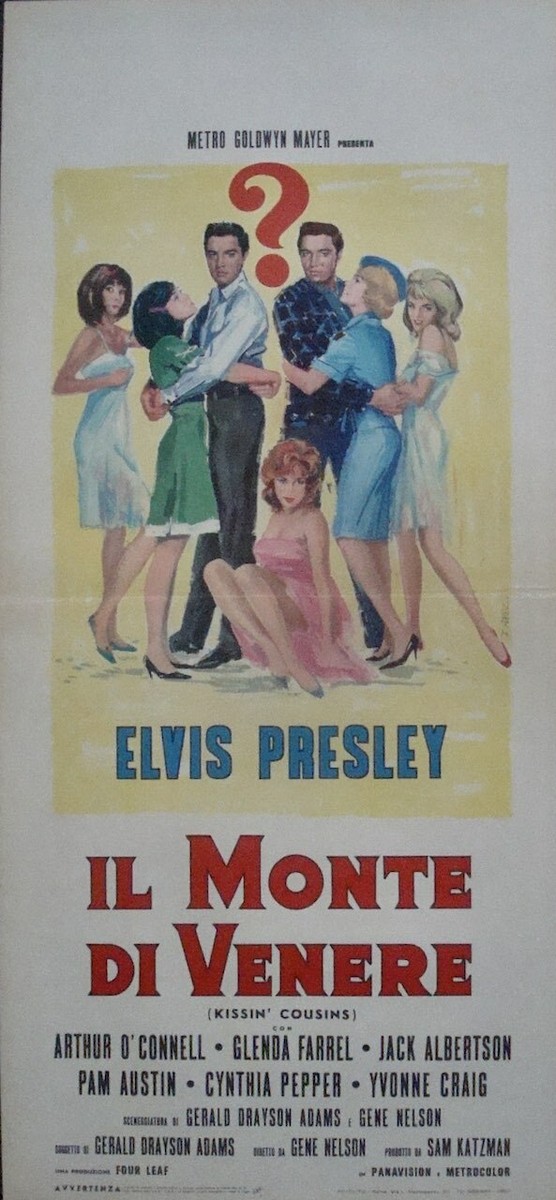
Elvis considered this his most "embarrassing" film to date. He knew the story was ridiculous, he hated the way he looked, the processing technique which enabled having two Elvises on screen was laughably amateurish, and in the grand finale, you can see Elvis's body double walking towards the camera. He was obviously not meant to be seen from the front, but it was noted that it was, "too expensive to shoot over."


About three decades before playing the hillbilly Elvis character's haggard mother in this film, Glenda Farrell had been a glamorous contract player at Warner Brothers whose credits included co-starring roles with many of the top drawer Warners leading men and the recurring title role in the studio's popular Torchy Blane franchise.

Actress Teri Garr, who appeared as a dancer in seven Elvis Presley movies, can be seen in several dance sequences wearing a blue dress.

On the similarity of every Elvis movie to every other Elvis movie, a studio executive once quipped: "Why do we bother to give his movies titles - Couldn't they just be numbered?"

The title song Kissin' Cousins, which was performed as the movie's finale, reached #12 on the Billboard Hot 100 and was certified Gold by the RIAA.

Howard Thompson of The New York Times wrote, "With the flavor of Fun in Acapulco - and that it was - fairly fresh, Elvis Presley's movie status takes a nosedive in his latest, Kissin' Cousins. Sam Katzman's production is tired, strained and familiar stuff, even with double-barreled Presley."
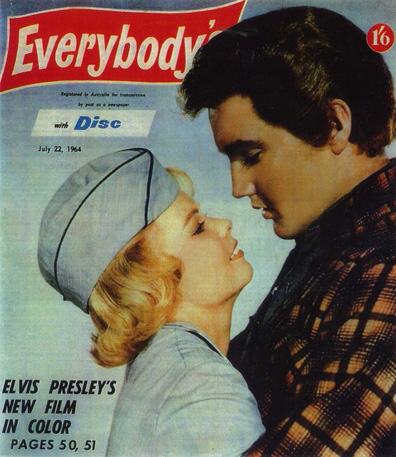
Variety wrote, "This new Elvis Presley concoction is a pretty dreary effort, one that certainly won't replenish the popularity of Sir Swivel. Presley needs - and merits- more substantial material than this if his career is to continue to flourish as in the past." One of the review's primary criticisms was "the business of bursting into song out of context in the middle of a scene. This used to be reasonably acceptable to audiences, but now it is beginning to evolve into an anachronism."

This film's screenplay was nominated for a Writers' Guild Award as the Best Written Musical of 1964. It lost to the year's biggest box office hit, Walt Disney's Mary Poppins.






--- ---
And that's all for now, folks!
Tune in next time...
Same place, same channel.
Kisses For Breakfast - Movie Trailer
(1941)
Kissin' Cousins - Movie Trailer
(1964)
--- ---





No comments:
Post a Comment